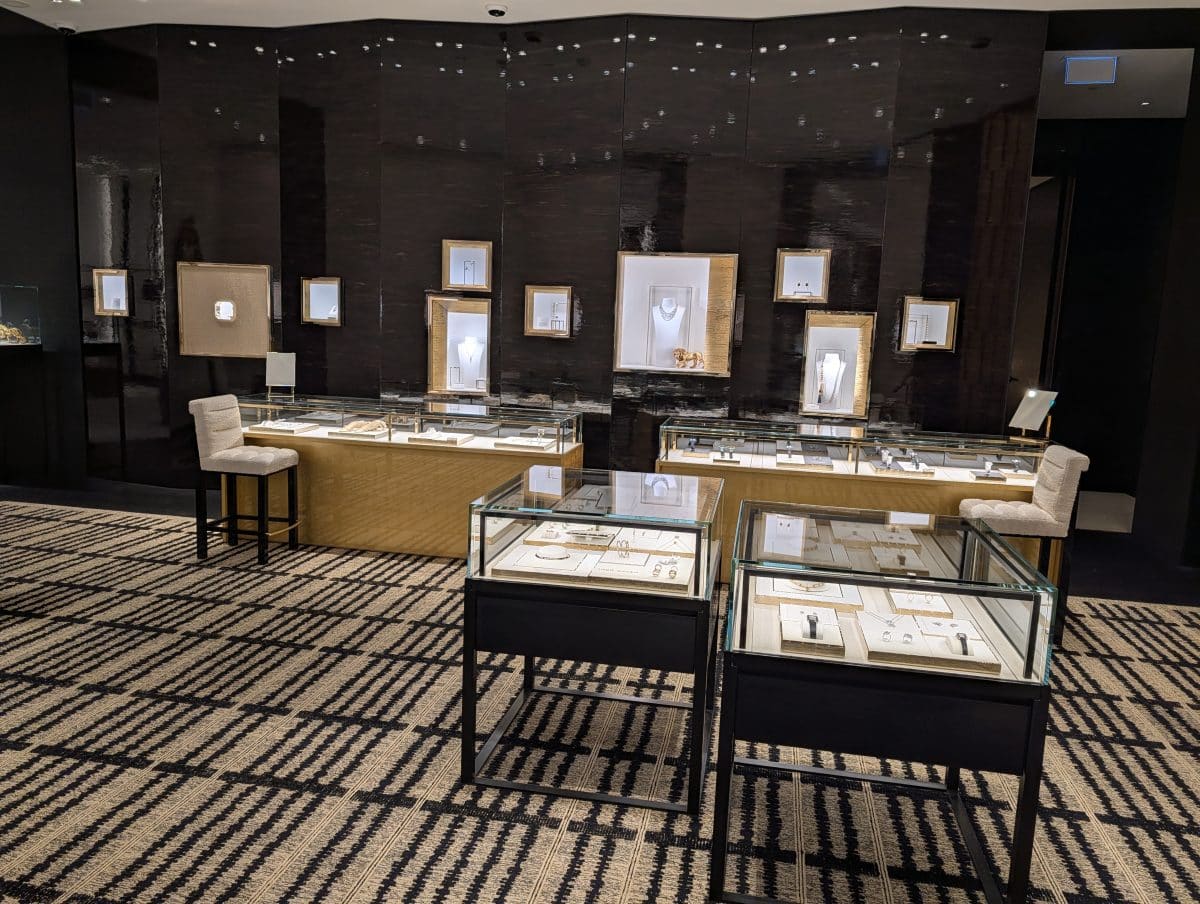
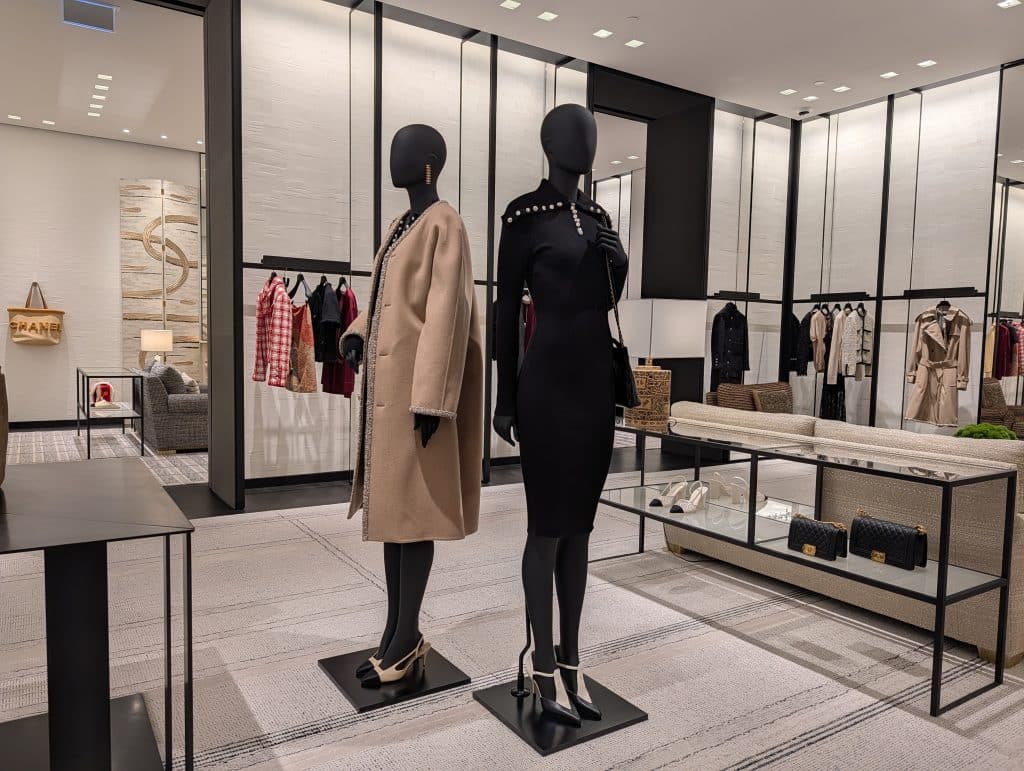
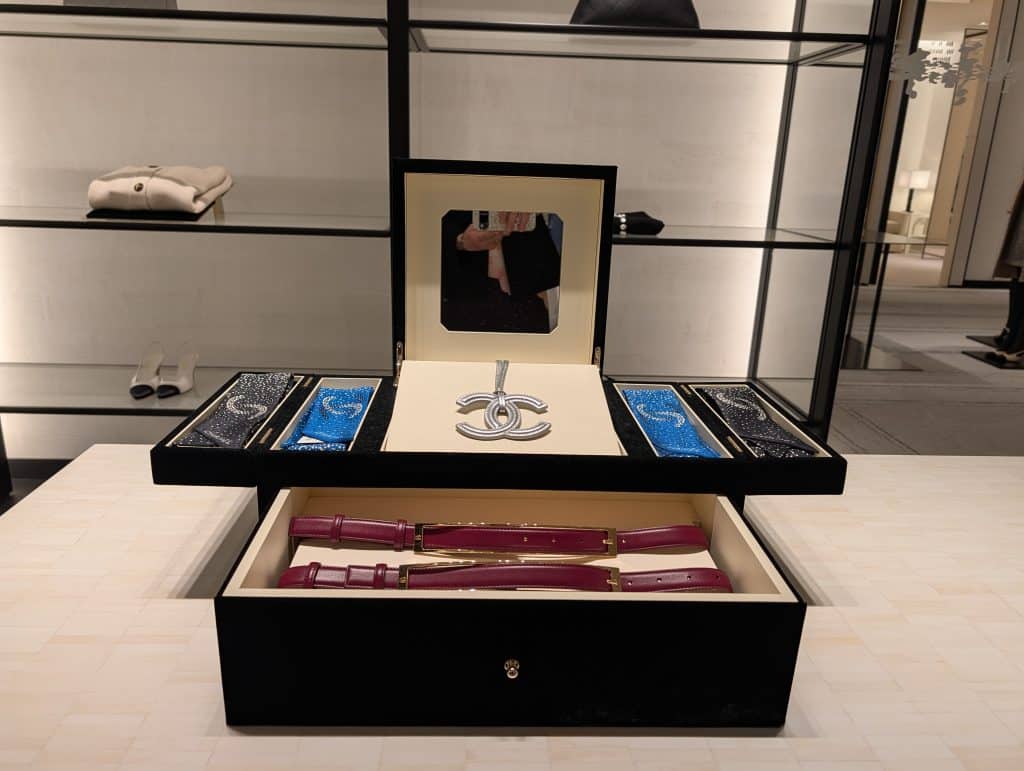
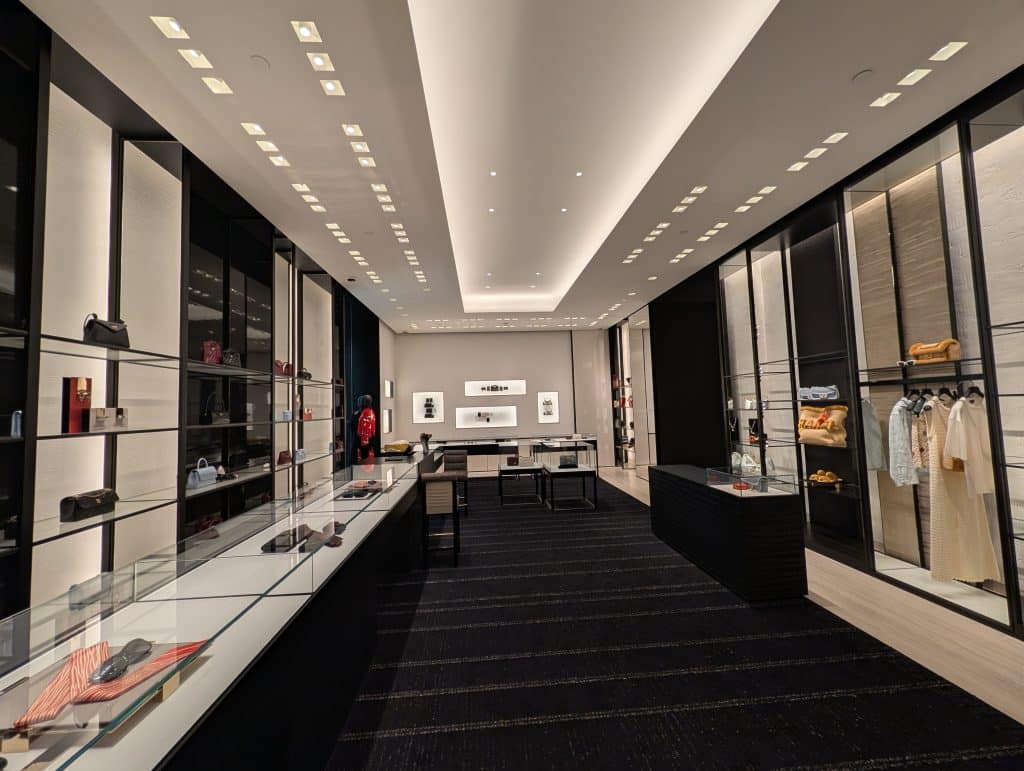
CHANEL‘s new Oakridge Park boutique is, without question, one of the most striking retail spaces to open in this city in years. Peter Marino‘s design unfolds across 750 square metres, room by room: luminous white marble, black lava stone, gilded accents catching the light beside deep burgundy tones and blush finishes. It would be easy to focus only on what stands directly in front of visitors.
But spend enough time inside this boutique, and a larger story starts to surface, one about what CHANEL is building well beyond it.
A City Already Familiar
Vancouver has known CHANEL since 1991, when the House opened a modest boutique at 755 Burrard Street. A standalone address on West Hastings Street followed, and in 2007 CHANEL moved into Holt Renfrew at CF Pacific Centre, expanding that concession into a ground-floor boutique by June of 2016. Each move traced the city’s own growing appetite for luxury retail, and Oakridge Park now gives the House its first free-standing address in Western Canada, and its largest presence in the city to date.
This is as much a story about square footage and craftsmanship as it is about a longer timeline, one stretching all the way to 2040.
The 2040 Deadline
CHANEL has set a formal target of reaching net-zero greenhouse gas emissions across its full value chain by 2040, a goal validated by the Science-Based Targets initiative. Before that date arrives, the House has committed to cutting scope 1 and 2 emissions by half, and reducing scope 3 emissions substantially, both by 2030.
Reaching those numbers means decarbonizing manufacturing, expanding regenerative agricultural practices, and investing in circularity at every stage of production. It also means taking ownership of emissions beyond the House’s own walls. Since 2021, CHANEL has expanded the scope of its reporting to include integrated suppliers as part of its carbon footprint, and now counts their emissions among its own totals. None of this is visible from the sales floor at Oakridge Park, but all of it shapes what eventually arrives there.
Gardens Behind the Counters
Some of the most interesting work happens far from any retail address. CHANEL maintains a network of Open-Sky Laboratories, outdoor sites devoted to botanical research for its Fragrance and Beauty lines. The first opened in Madagascar in 2005, where scientists identified the skin-repairing properties of the Vanilla planifolia orchid. Others have since followed in Bhutan, Costa Rica, Provence Alpes Côtes d’Azur, and Gaujacq in France, the latter now certified for organic farming and recognized for its environmental practices across biodiversity, water management, and land stewardship.
The Gaujacq site carries added significance within the House, its grounds now home to thousands of camellia plants tied to a flower long associated with CHANEL’s own visual identity. Inside a boutique this polished, it is easy to forget that a fragrance on the counter nearby may trace back to a research garden thousands of kilometres away. That distance, and the work required to close it responsibly, is precisely what a 2040 target demands.
Teaching the Next Generation
CHANEL has built a Global Sustainability Academy to prepare its own people for that work, including a partnership with the University of Cambridge that has upskilled several hundred leaders and operational teams across the organization. A related collaboration with Cambridge’s Institute of Manufacturing has focused on efficiency within the House’s supply chain in Italy and France, targeting both material and energy use at the manufacturing level.
The same long view shows up closer to home, too. A dedicated Care and Repair Salon, part of the CHANEL et moi initiative, has been built into the Oakridge Park boutique to help clients preserve pieces they may keep for decades. It signals that longevity has become part of how this House measures success, and it is a reminder that sustainability, for CHANEL, extends past the supply chain and into the relationship a client keeps with a single piece over time.
A Launch with Layers
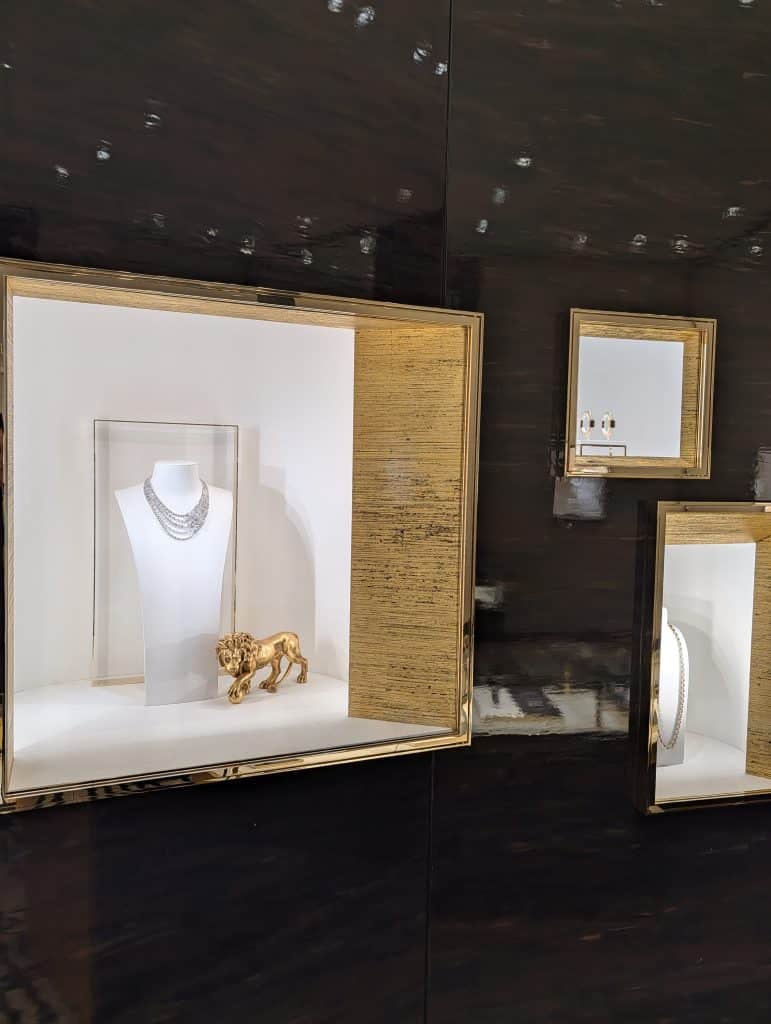
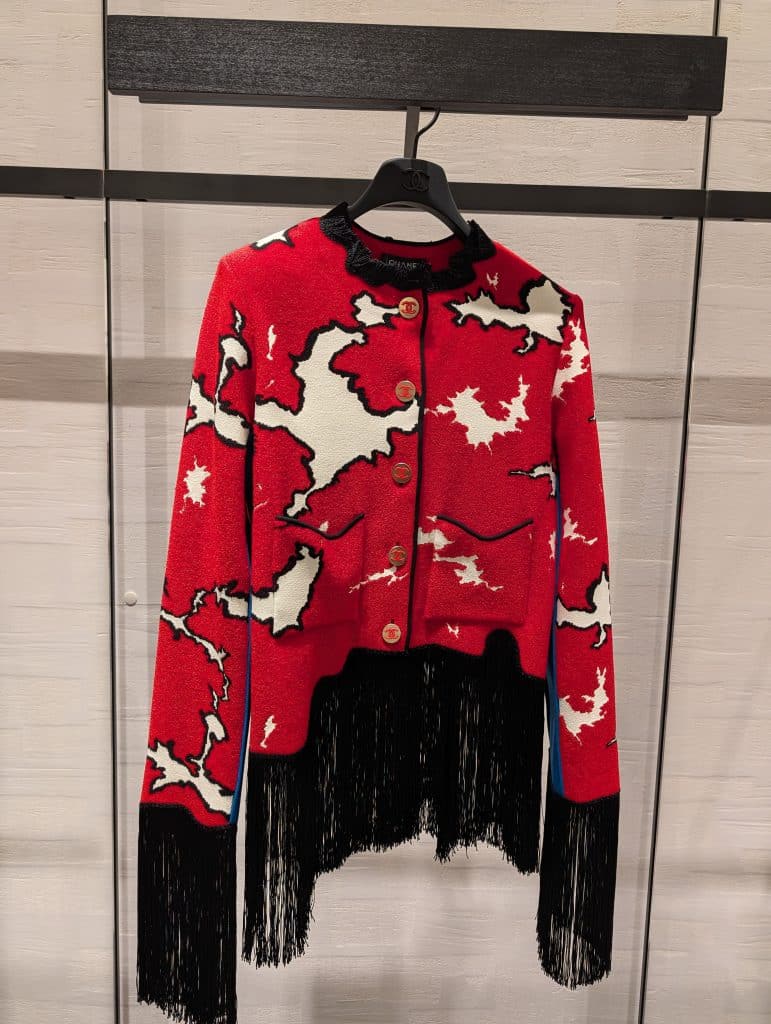
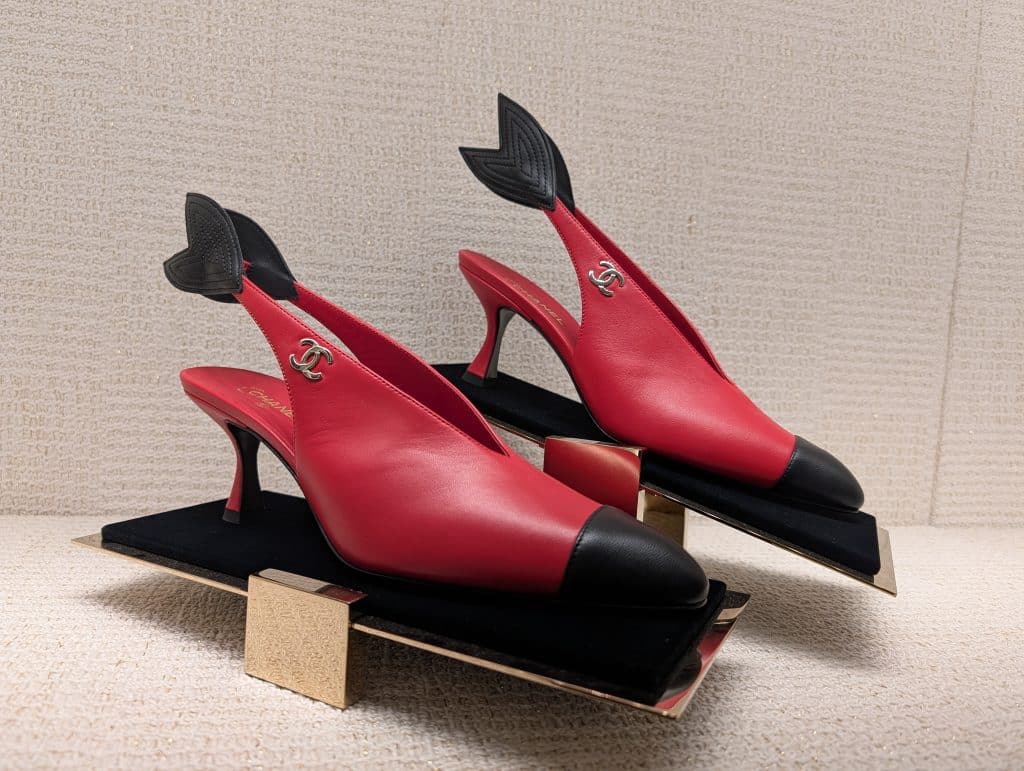
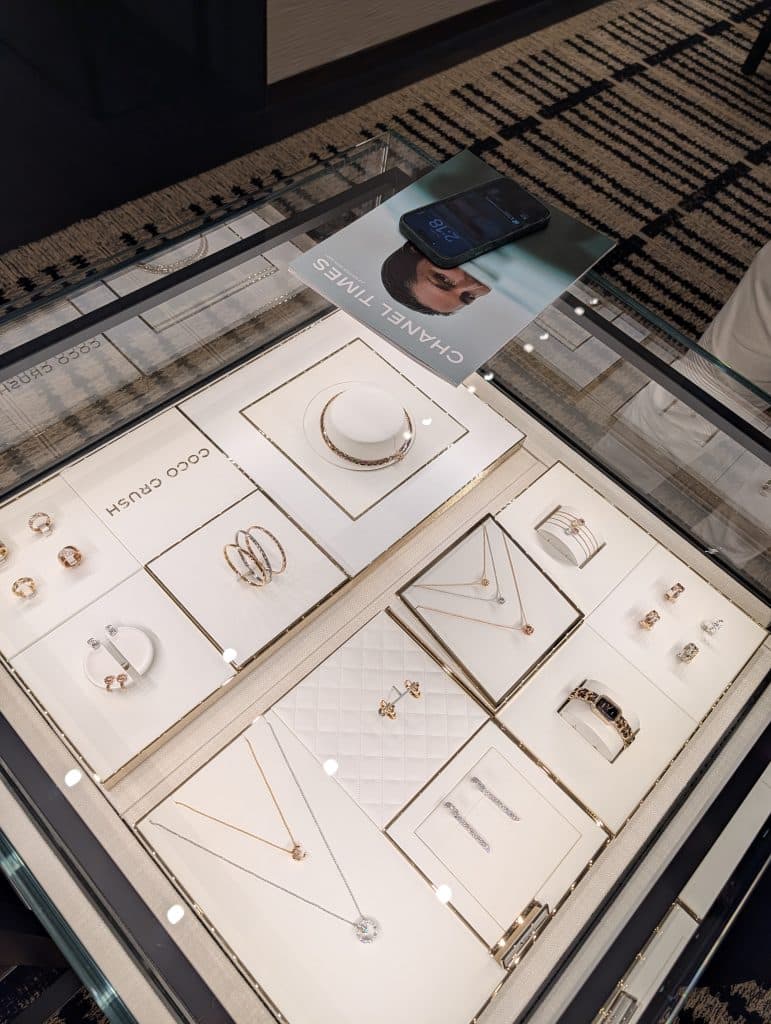
The boutique opens alongside the Métiers d’art 2026 collection, giving Canadian shoppers an early look at Artistic Director Matthieu Blazy‘s vision for the House. Dedicated salons carry the season’s newest accessories and jewellery, a Watches and Fine Jewelry salon presents the latest High Jewelry creations, and a Fragrance and Beauty destination includes a CHANEL Privé suite for personalized consultations. It is, by any measure, a launch worth covering on its design alone.
But covering CHANEL in 2026 means covering more than the marble and the merchandise. Fifteen years remain before the House’s 2040 target arrives, and Oakridge Park is where that timeline and this city’s shopping habits now intersect. What CHANEL is selling here extends beyond ready-to-wear and fine jewellery, toward a bet that a House built on heritage and precision can also be built to last, in every sense of the phrase.
Author Profile

- Helen Siwak is the founder of EcoLuxLuv Communications & Marketing Inc and publisher of Folio.YVR Luxury Lifestyle Magazine and PORTFOLIOY.YVR Business & Entrepreneurs Magazine. She is a prolific content creator, consultant, and marketing and media strategist within the ecoluxury and luxury lifestyle niches. Helen is the west coast correspondent to Canada’s top-read business magazine Retail-Insider, holds a vast freelance portfolio, and is an EIC for Hire. Connect with her here: [email protected].
Latest entries
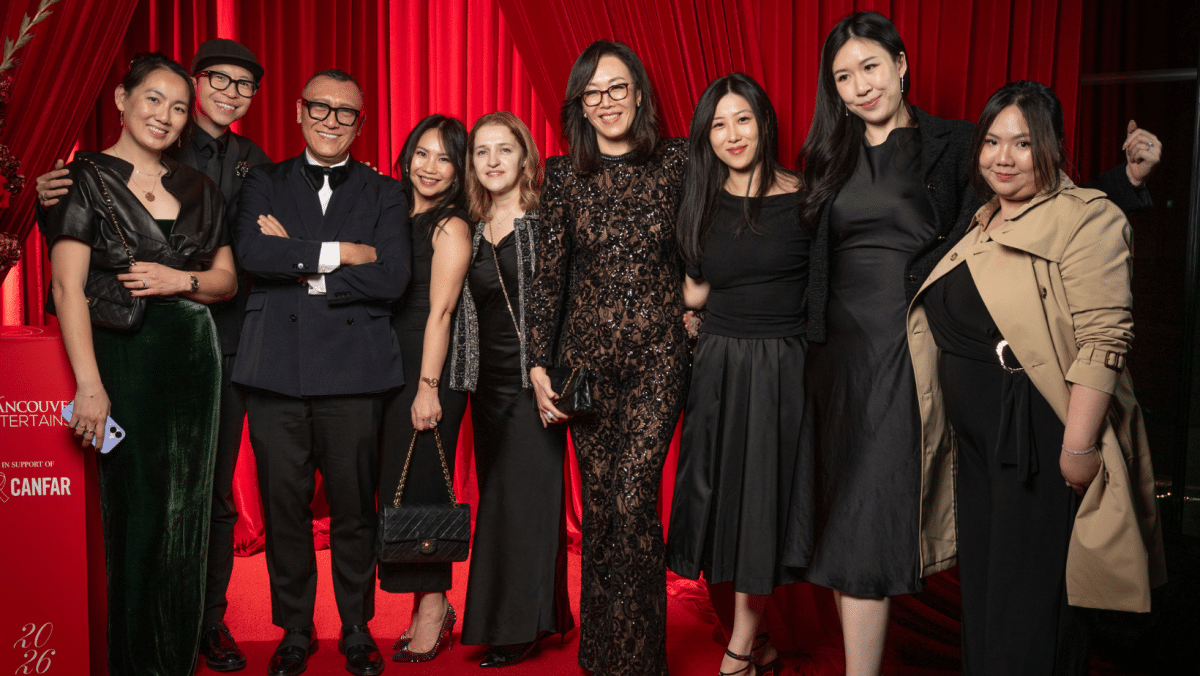 FoF ☆ Charity & PhilanthropyOctober 26, 2026Inside Vancouver Entertains: A Night the City Will Not Forget
 FoF ☆ Charity & PhilanthropyOctober 26, 2026Inside Vancouver Entertains: The After Party in Photos
 FoF ☆ Arts & CultureOctober 26, 2026A Privilege He Will Never Take for Granted: Michael Kenna’s Beautiful Fukushima Opens in Vancouver
 FoF ☆ Arts & CultureOctober 13, 2026From a Business Card to a Seven-Year Partnership: Michael Kenna and Kostuik Gallery