Riverside Luxury Cruises’ newest and most refined vessel The Debussy delivers an award-winning standard of care across eight days on the waterways of the Netherlands and Belgium, where every port arrival is effortless, every departure is handled, and the only decision that genuinely requires your attention is how you intend to spend the afternoon.
THE LOGIC OF THE SHIP
Independent travel through the Netherlands and Belgium demands a level of administrative resolve that the geography compounds — most of the region’s most rewarding towns and cities are navigable only by canal and on foot, making a privately docked vessel not merely a convenience but the most logical base of operations available. Hotel reservations across multiple cities. Vehicle rentals, fuel, parking. The ongoing calculation of what each meal will cost, whether gratuity is expected, and whether the day’s exchange rate is working in your favour. The packing and unpacking that punctuates every transition.
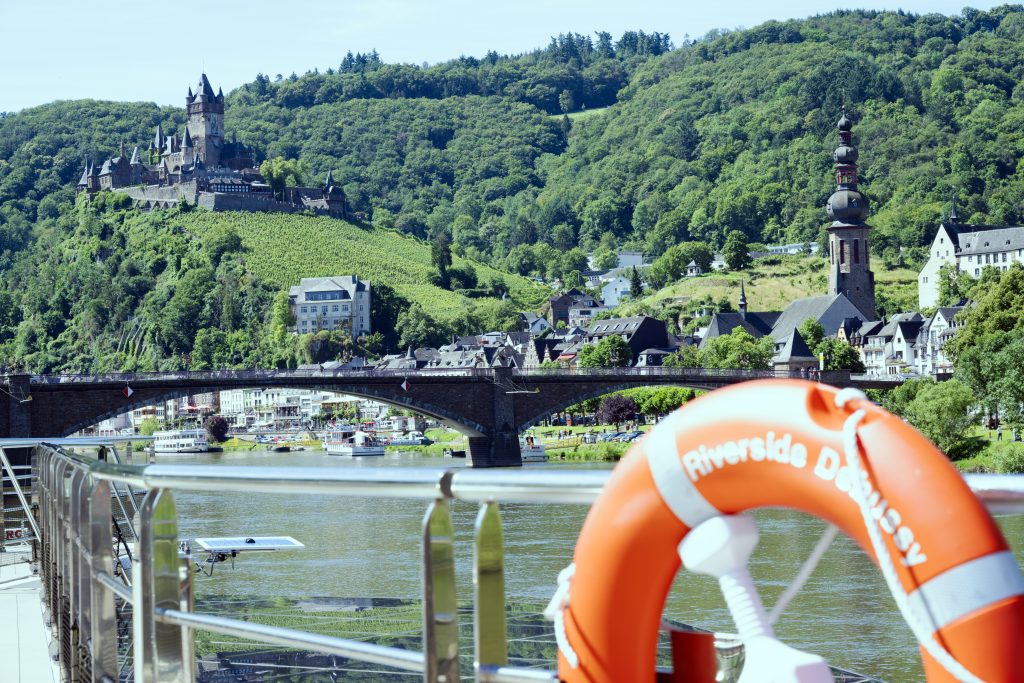
Aboard the Debussy, that entire layer of logistics simply does not exist. Your suite remains your home for the duration of the voyage. Luggage stays where it belongs. The ship repositions overnight while you sleep, and morning arrives with a fresh city framed in floor-to-ceiling windows.
Nothing changes hands onboard — packages are fully inclusive, and tipping is not part of the culture here. For guests who wish to step into another tier for the evening — a vintage whisky, a specific bottle of wine — the ship accommodates that gracefully. Simply sign it to your room and settle later. What you choose to spend in port is your own affair; everything else has already been considered.
WiFi is included across all packages. Writing desks feature in the majority of suites, and USB charging points and 220-volt sockets are distributed thoughtfully throughout. For guests who work remotely or maintain an active digital life, the Debussy does not ask anyone to choose between being away and staying reachable.
A SUITE FOR EVERY ITINERARY
The accommodation aboard the Debussy spans a carefully considered range, from the deeply generous to the elegantly precise. Each category reflects the same commitment to material quality and spatial intelligence — the distinctions lie in scale and configuration, not in standard.
The Owner’s Suite commands 70 square metres across two bedrooms and two bathrooms, accommodating up to four guests. For families travelling together, or two couples who want shared proximity without forfeiting privacy, the arrangement functions less like a cabin than a well-appointed private residence. The primary bedroom faces a French balcony with unobstructed river views, and the main bathroom shares that outlook. A marble fireplace anchors the living room, where a dining table seats four with ease.
Butler service handles laundry and ironing. Complimentary limousine transfers are included on embarkation and debarkation days. The Owner’s Suite operates without compromise in any direction.
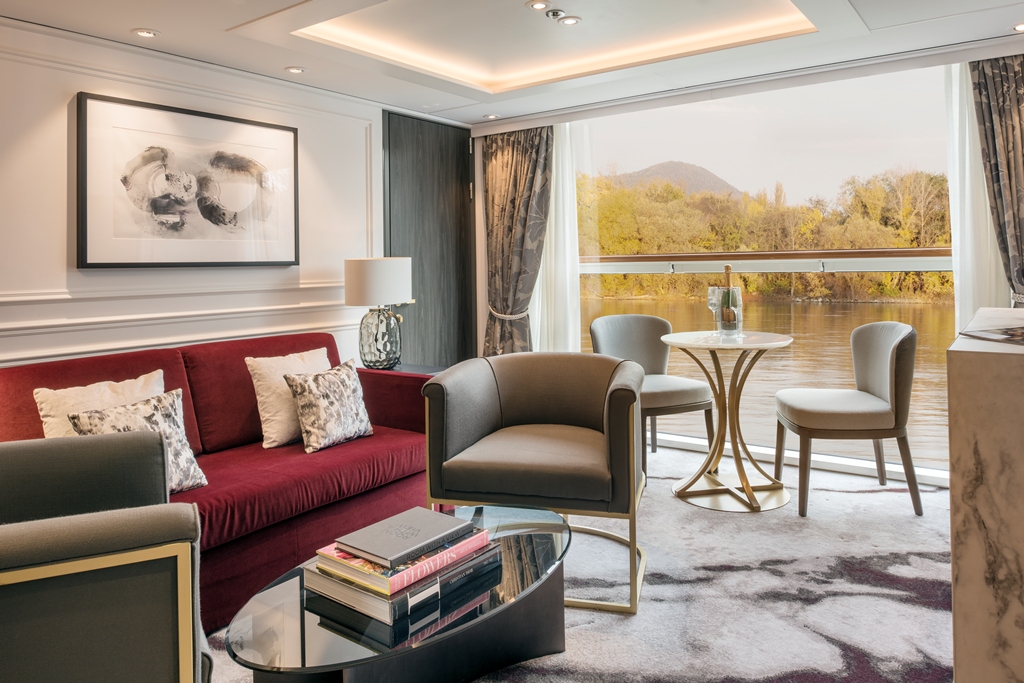
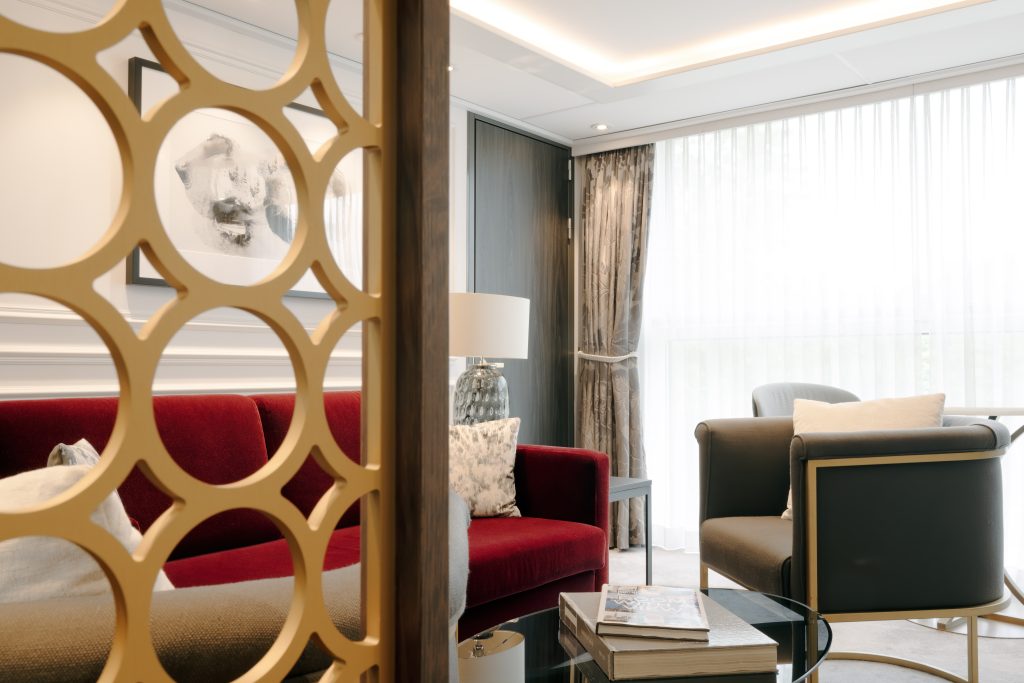
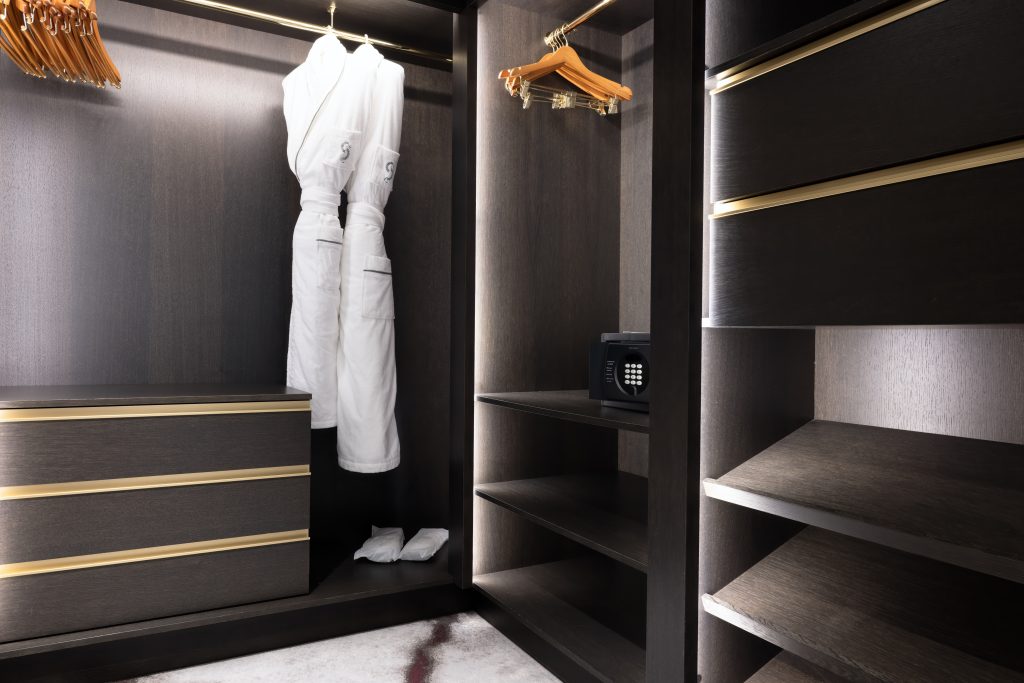
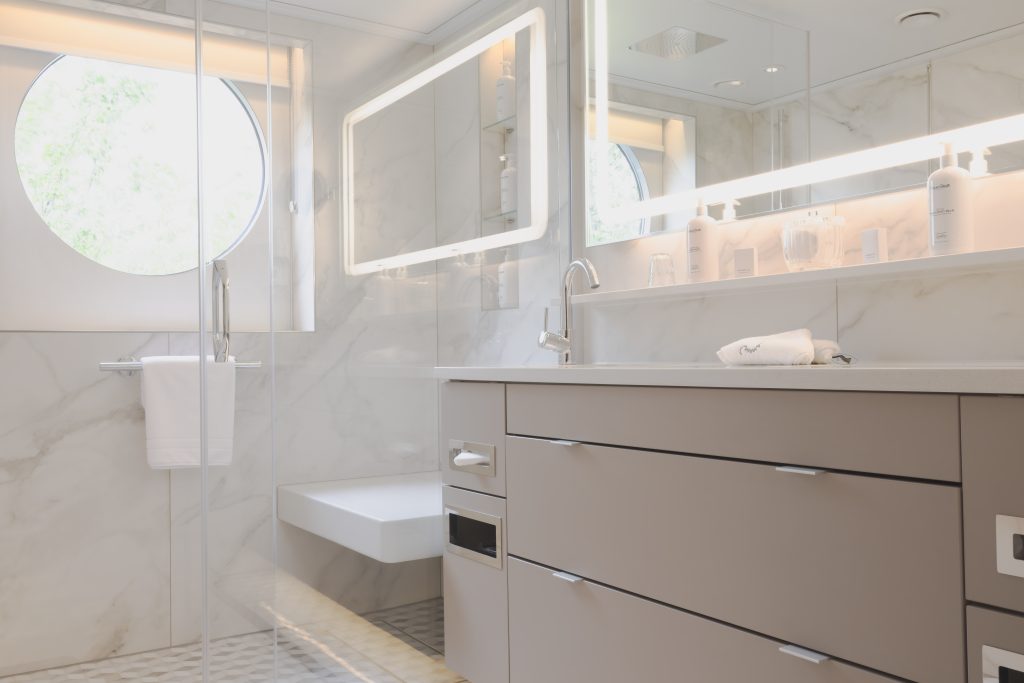
The Debussy Suite, at 47 square metres, is the considered choice for couples. Panoramic floor-to-ceiling windows frame the river from both the bedroom and the living area, making the landscape a constant presence — over morning coffee, at dinner, in the quiet interval before the day organises itself. A fireplace, a walk-in closet, a double vanity bathroom, and the same limousine transfer privilege as the Owner’s Suite complete an accommodation that asks very little beyond the willingness to settle in. The writing desk is proportioned for actual use, and the 220V/110V outlets alongside USB ports confirm that productivity and indulgence are not mutually exclusive propositions here.
THE SOCIAL SUITES
For groups of friends travelling together — those who share an appetite for discovery but value the restoration of a private space — the Riverside, Seahorse, Sonata, Symphony, and Melody Suites offer individual sanctuaries ranging from 18 to 24 square metres. Each holds its own king bed, elegant bathroom, and French balcony or panoramic window. The suites differ only in subtle matters of placement and proportion.
What this configuration offers collectively is something no shared rental arrangement can provide: the ability to convene at the Botanist Bar for an evening cocktail or gather for dinner at the Waterside Restaurant, then withdraw to complete privacy without negotiation.
THE TABLE IS SET
Dining aboard the Debussy is structured with sufficient variety to feel like genuine choice rather than managed rotation.
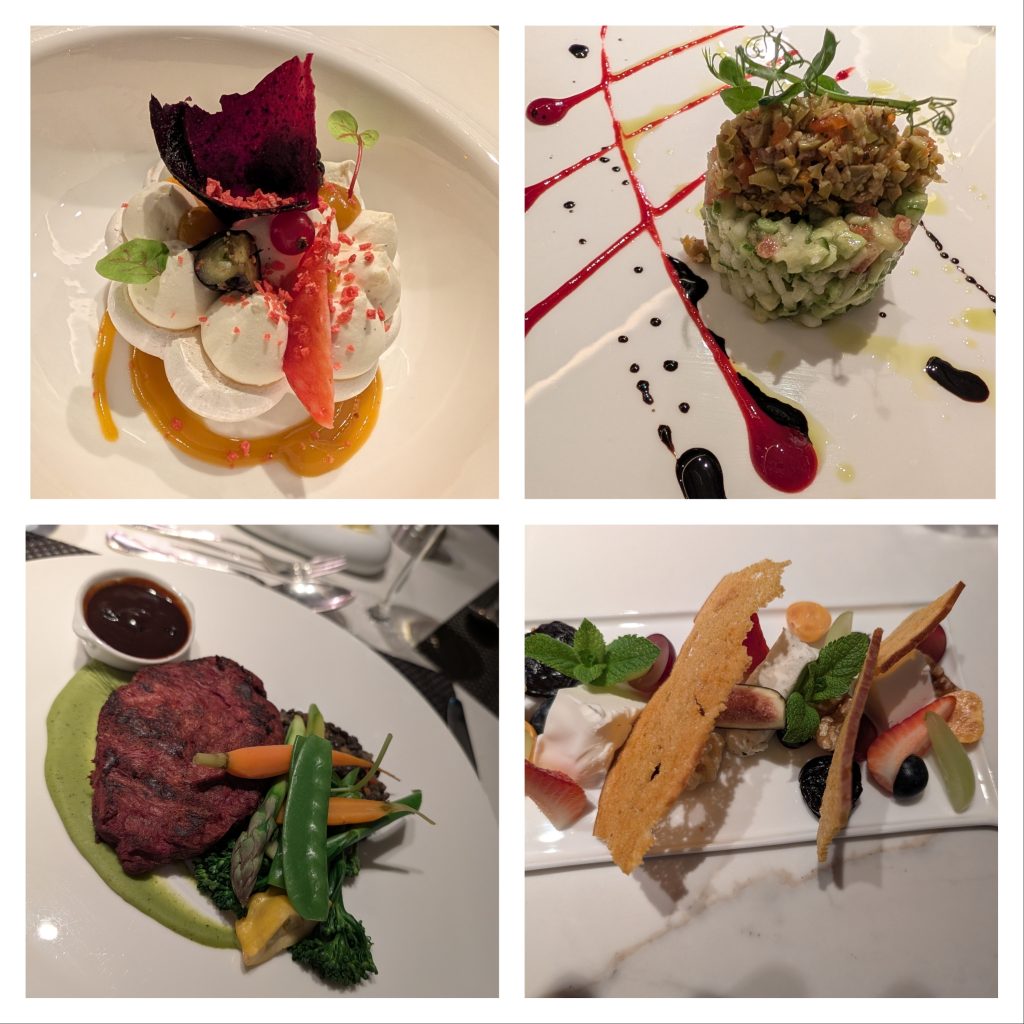
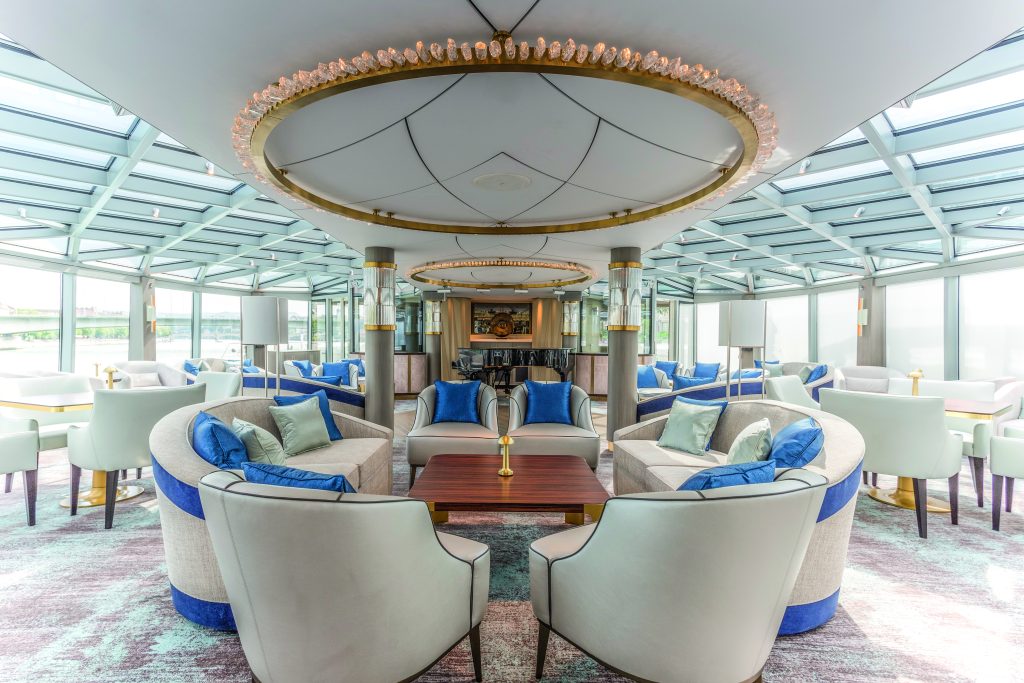
The Waterside Restaurant serves as the culinary anchor — a morning and midday buffet that gives way each evening to a fine-dining experience where royal blue velvet armchairs and an atmosphere of unhurried elegance establish the register before a single dish arrives.
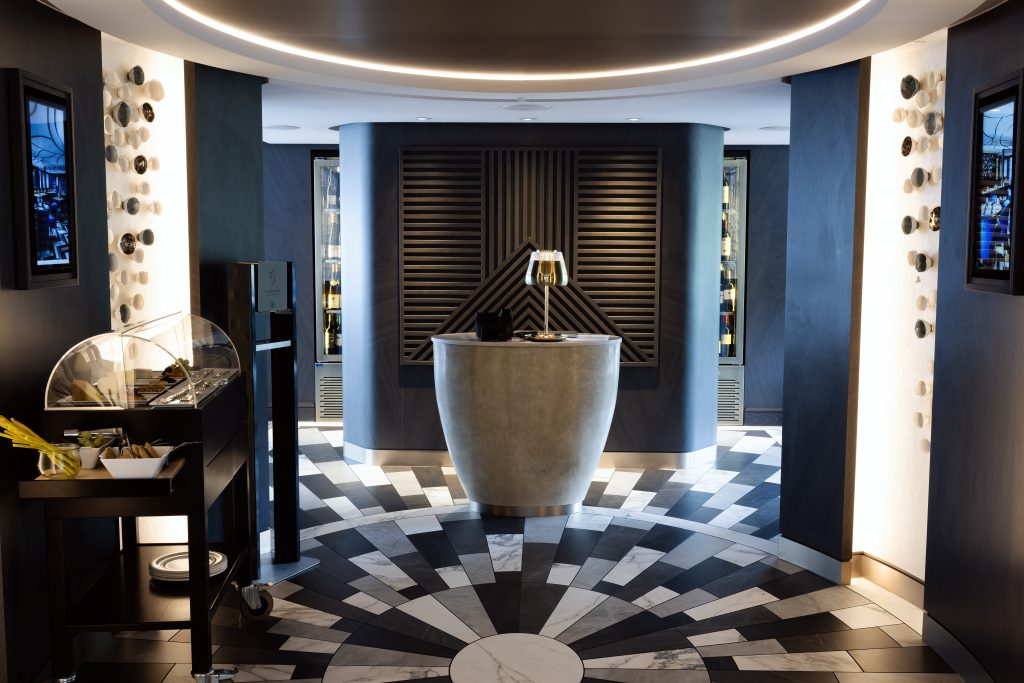
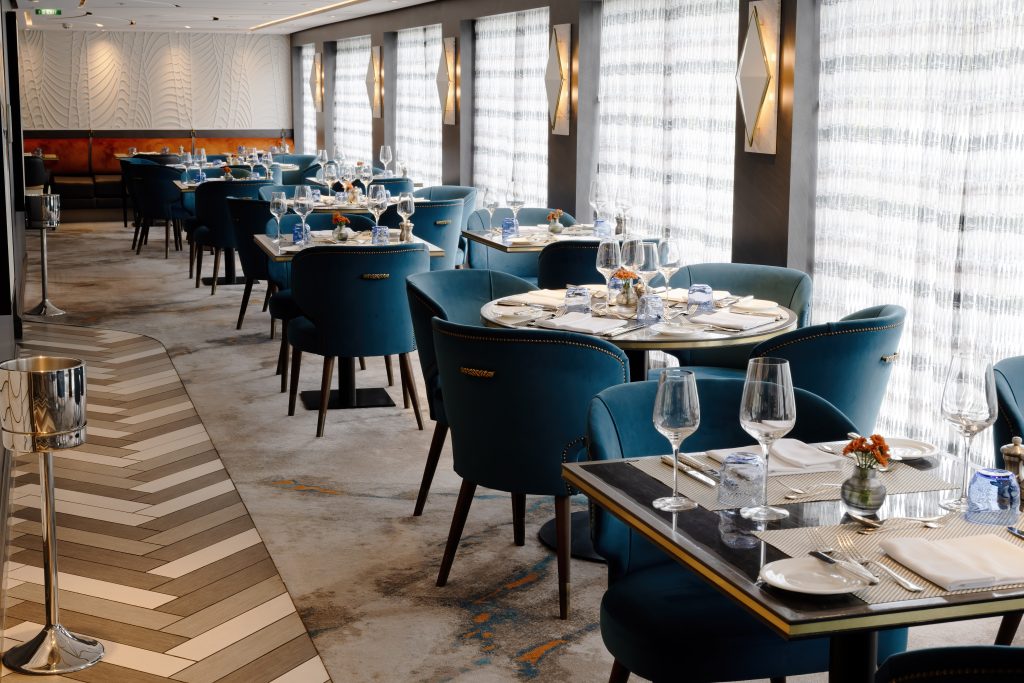
The buffet itself operates at a standard that the word rarely implies: multiple hot stations led by the ship’s chefs, cold stations stocked with precision, a dedicated dessert bar, and a salad bar composed with the same attention to ingredient and presentation as anything plated in the dining room. This is not a buffet in the conventional sense — it is a curated spread that simply invites you to serve yourself.
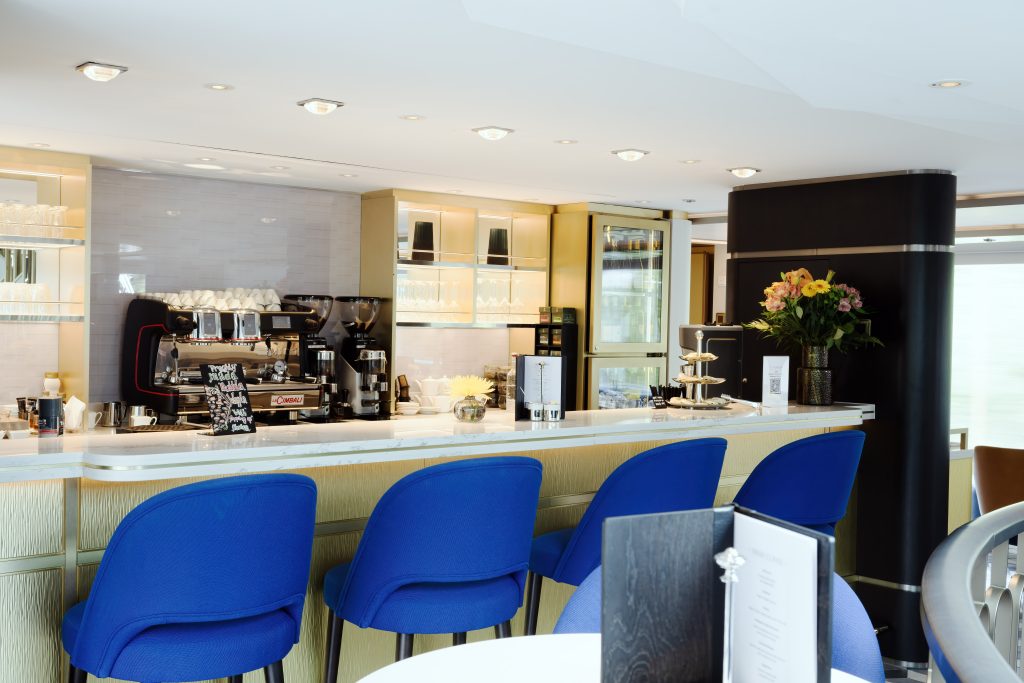
The Atelier operates with a lighter creative sensibility: fragrant pastries, fresh waffles, and house-made gelato available throughout the day, composed plates through the afternoon, and its most refined expression after dark.
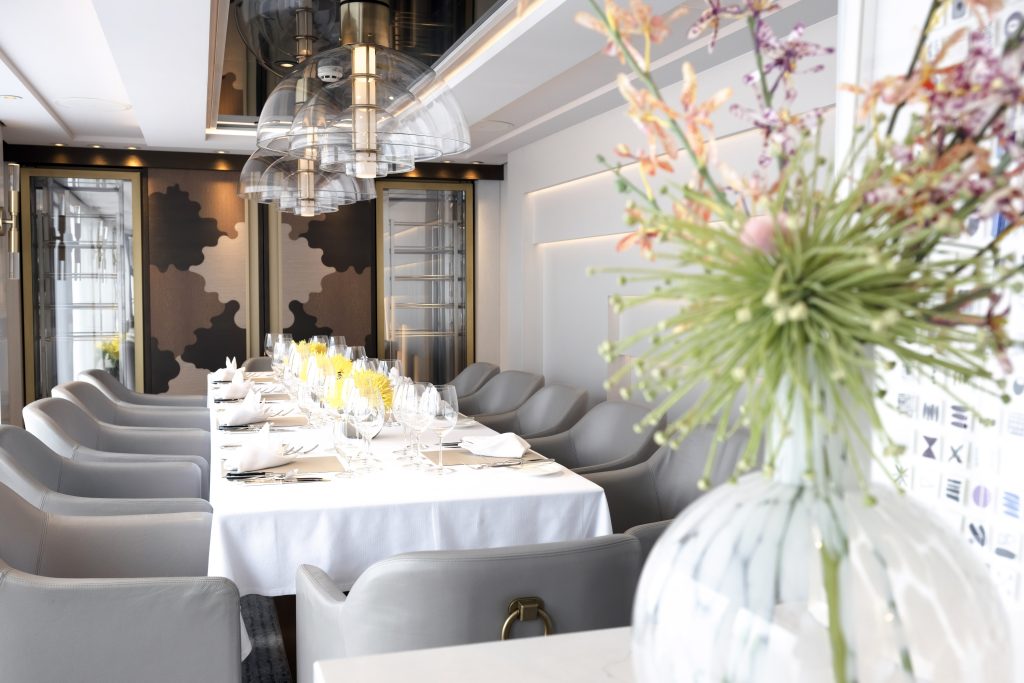
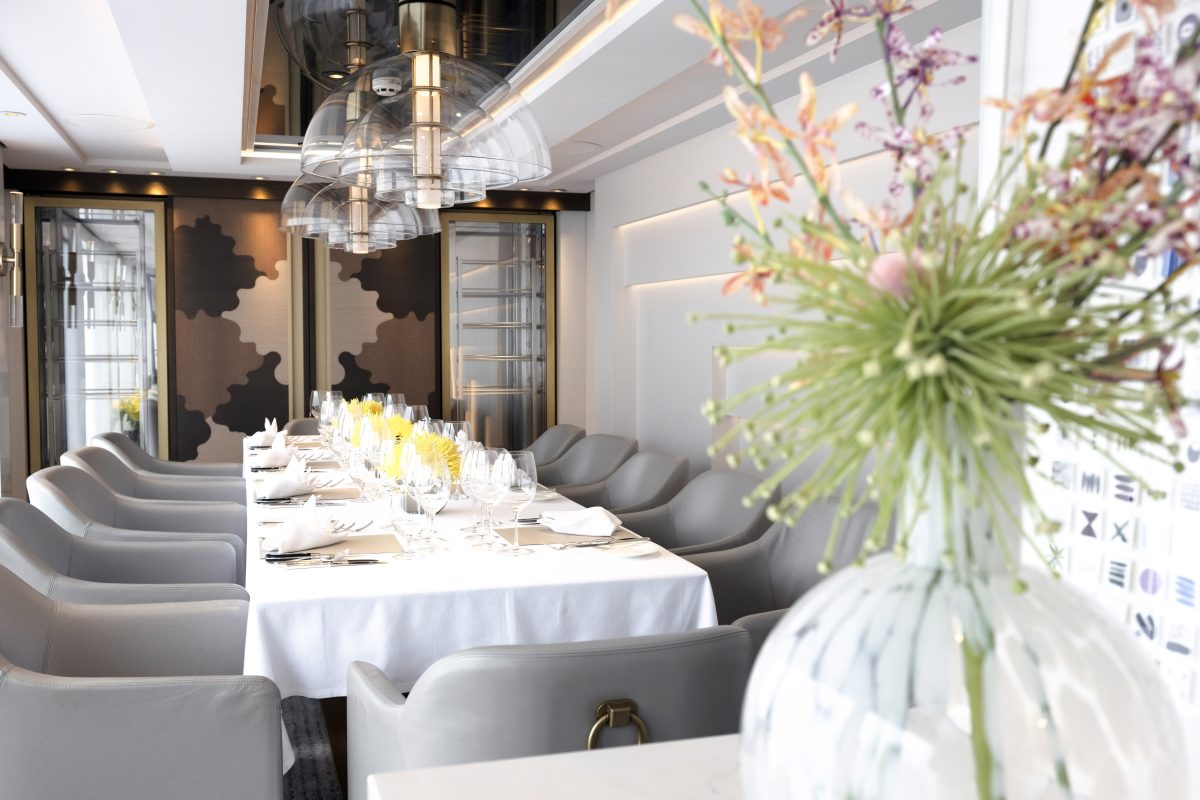
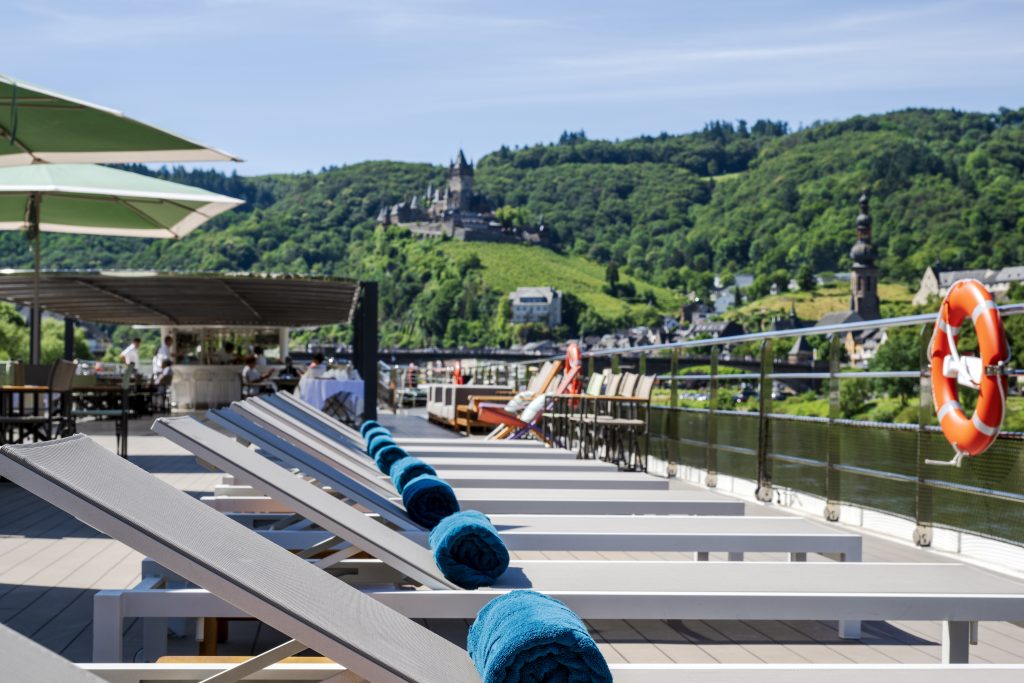
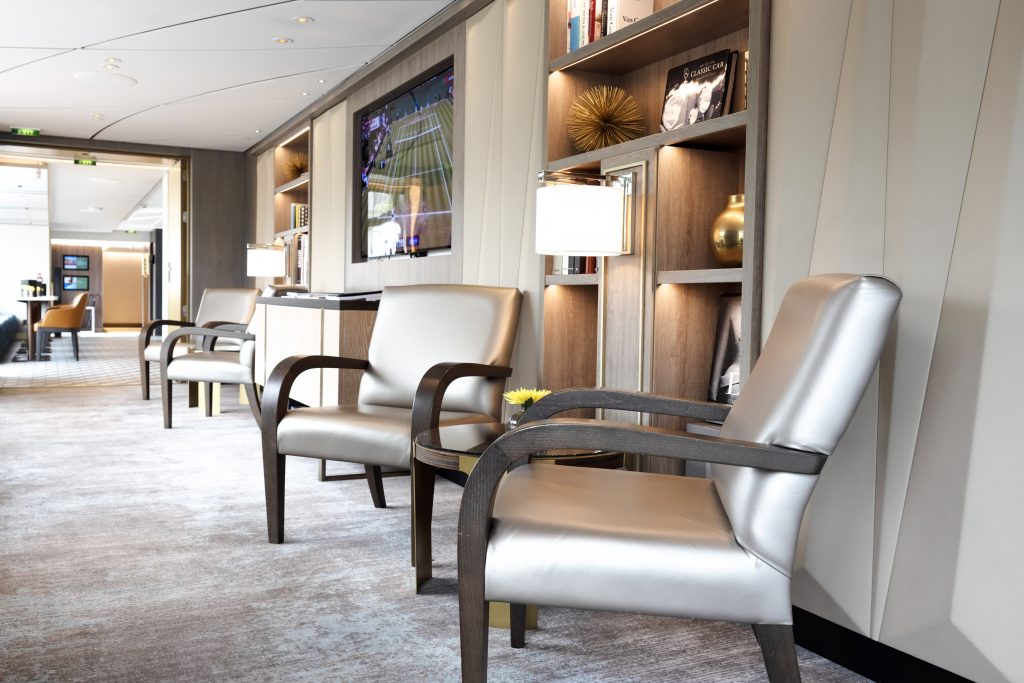
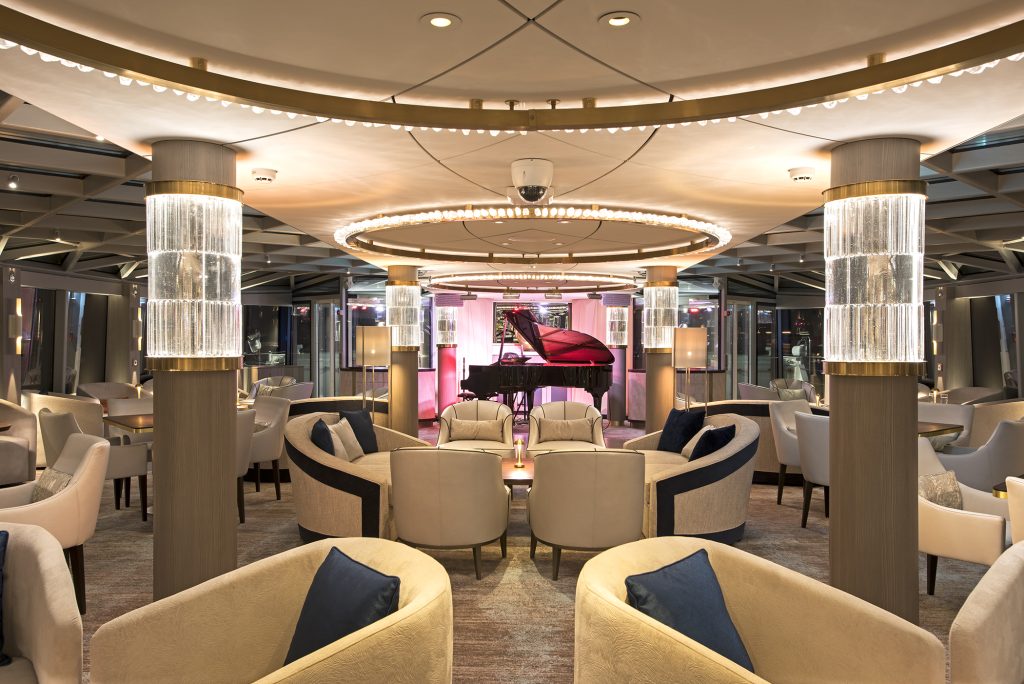
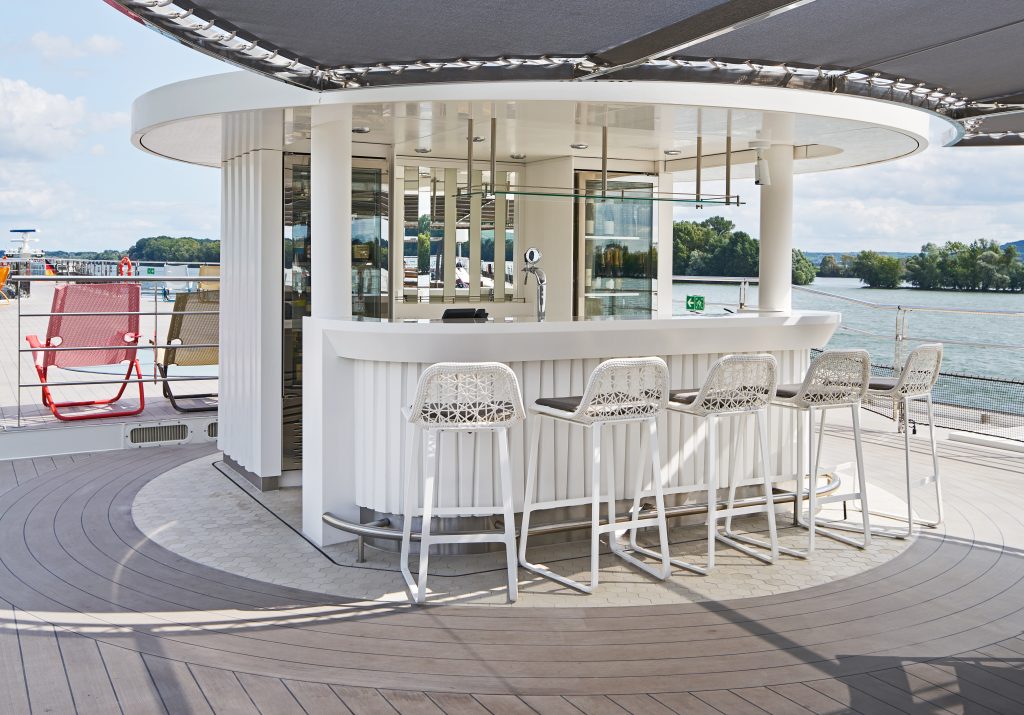
The Vintage Room convenes up to ten guests on select evenings around a long table for a six- to seven-course menu curated and paired by the ship’s Head Sommelier — an intimate, unhurried experience entirely distinct in character from the broader dining programme. The Botanist Bar draws on house-made syrups and infusions — lavender, thyme, rosemary, mint — to produce cocktails of genuine craft and fragrance. The Vista Deck bar opens at 10am and becomes the social centre of the ship on warmer afternoons, the river landscape shifting continuously beyond the rail.
RAISE A GLASS
The bar programme extends well beyond the drink in your hand. The Palm Court hosts an included onboard beer lecture led by a dedicated beer sommelier — a natural fit for a voyage moving through some of the world’s most storied brewing regions — and the ship’s mixologists offer a Flair and Expertise class that tends to make the evening that follows considerably more interesting. Neither is an add-on. Both are part of what the Debussy considers a complete experience.
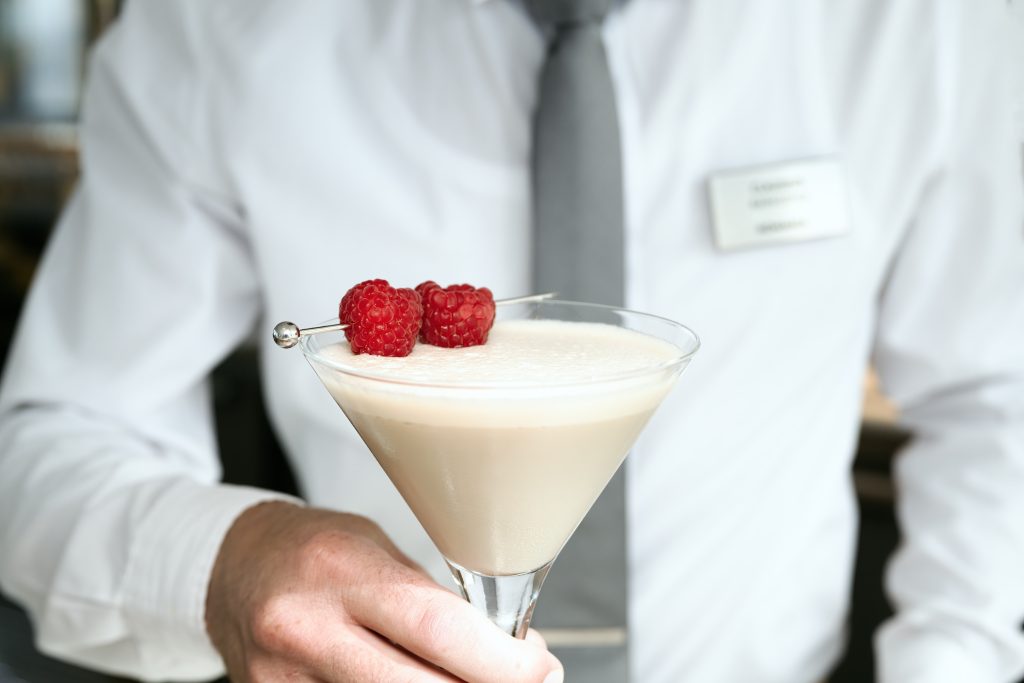
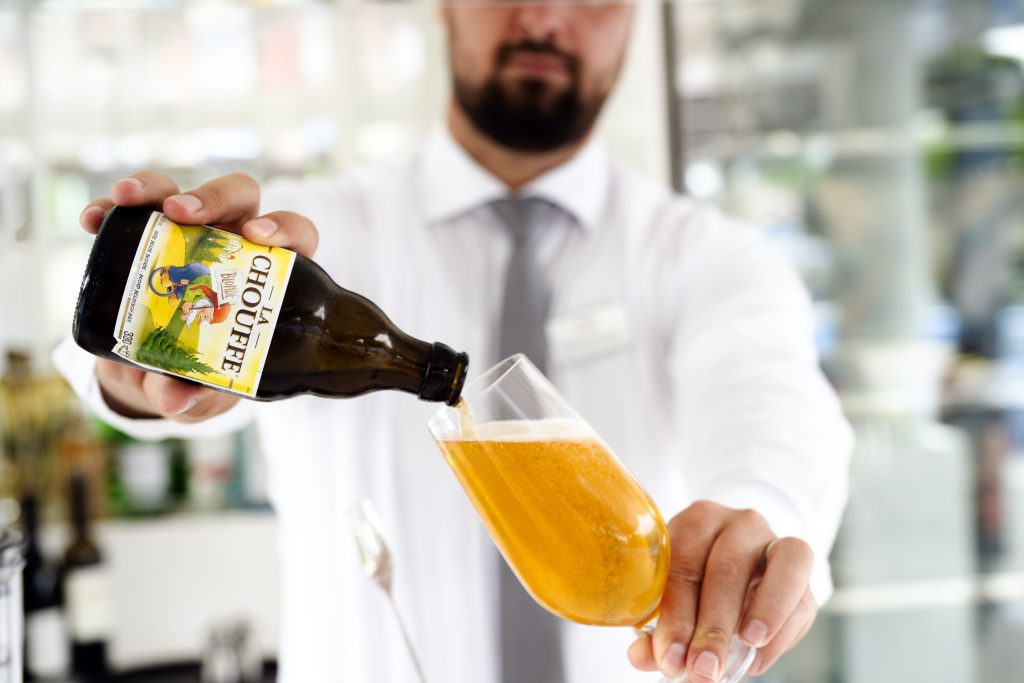
The wine programme deserves its own moment. The Debussy’s cellar draws from producers and regions that reflect the geography of the voyage — a Joh. Jos. Prüm Wehlener Sonnenuhr Auslese Riesling from the Mosel and a Dönnhoff Grosses Gewächs Felsenberg Felsenstürmchen from the Nahe sit alongside regional German selections that change as the ship moves through different stretches of river.
For those drawn to France, the list reaches into serious Burgundy territory — a Puligny-Montrachet Premier Cru from Olivier Leflaive, a Chateau Cantemerle Fifth Growth Bordeaux, and a Gaja Sito Moresco from Piedmont for those who prefer something with weight and structure.
And for evenings that call for something genuinely exceptional, a Dom Ruinart Rosé Champagne 2007 is available — the kind of bottle that needs no occasion beyond the fact that the river is moving and the night is clear.
WELLNESS UNDERWAY
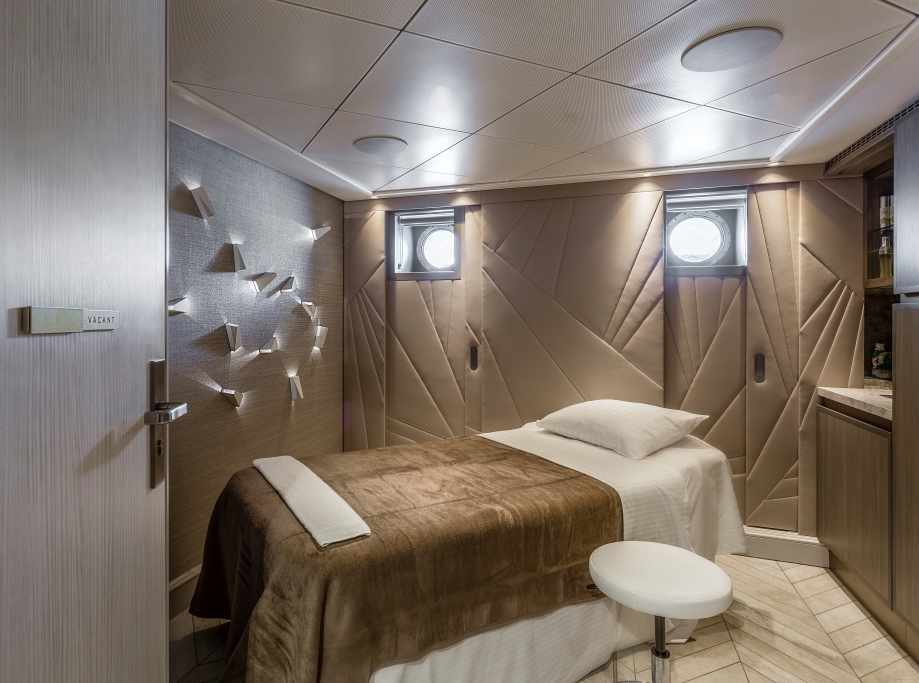
The spa aboard the Debussy is conceived in soft, natural tones that establish calm before any treatment begins. The Spa offers a range of massages and tailored facial treatments featuring Natura Bissé products from Barcelona — a luxury skincare house with a devoted following among those who approach their skin with the same discernment they bring to everything else. Each treatment is shaped around individual need, whether that means restorative bodywork after a long afternoon on foot in Ghent or a considered facial in the hours between ports.
The fitness area is compact and purposefully equipped — an elliptical, free weights, and stretching mats that provide what is genuinely needed to maintain a routine without excess. The lap swimming pool offers a low-impact alternative. On quieter mornings, it functions as one of the more meditative spaces on the ship.

IN FULL BLOOM
The Holland in the Heart of Tulip Season itinerary traces a route from Amsterdam through Arnhem, Nijmegen, Maastricht, and Antwerp — eight days that move through an extraordinary concentration of cultural and architectural heritage without a single bag claim or hotel check-in along the way. Departing from Amsterdam’s Veemkade, the ship navigates the IJ River through the Amsterdam Rhine Canal before entering the Nederrijn, passing through locks at Amerongen and Driel on the approach to Arnhem.
From Arnhem to Nijmegen the river runs without interruption — open water, unhurried passage, and the cycling-path-lined banks that speak quietly but unmistakably to Dutch civic life. South of Nijmegen, the ship moves through the Meuse Waal Canal, the Meuse River, the Lateraal Canal, the Juliana Canal, and the confluence of the Juliana Canal and the Meuse River before arriving in Maastricht and continuing to Antwerp.
THE AMSTERDAM EFFECT
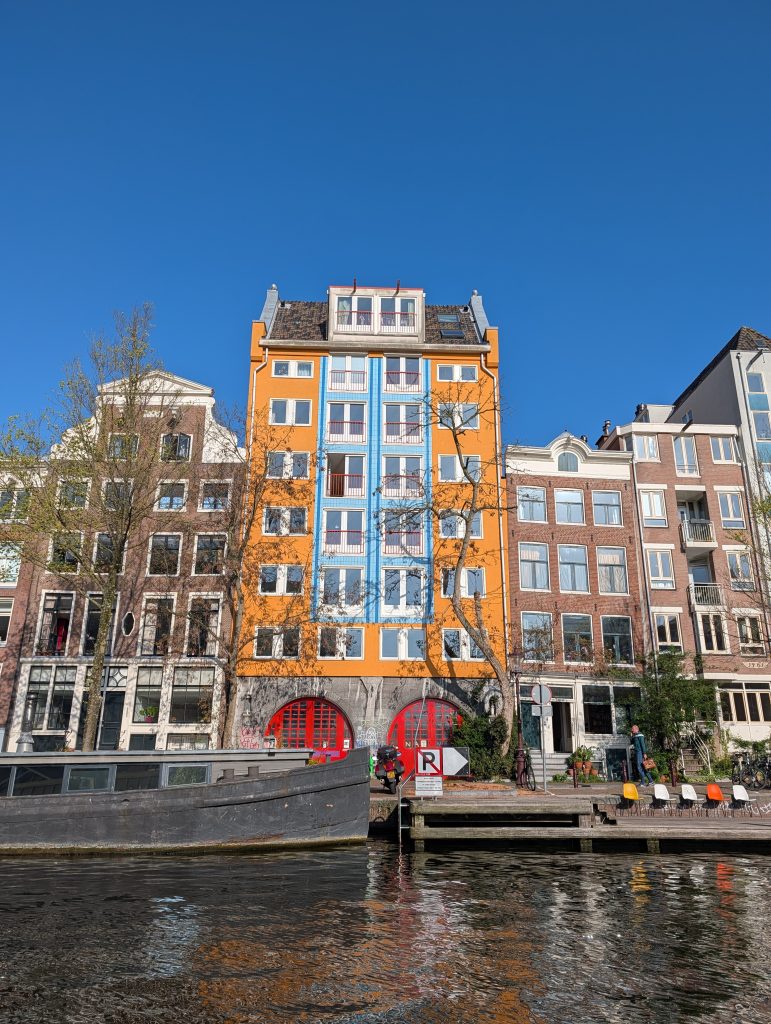
Amsterdam earns its place as both the opening chapter and the closing act of the itinerary. Few cities carry their history as gracefully — the 17th-century canal ring that defines the city’s layout is a UNESCO World Heritage Site in its own right, its arched bridges and narrow gabled houses composing a streetscape that has changed remarkably little in three centuries. The Anne Frank House stands as one of the most quietly devastating cultural sites in Europe, and the broader museum landscape offers enough to sustain several days of serious engagement.
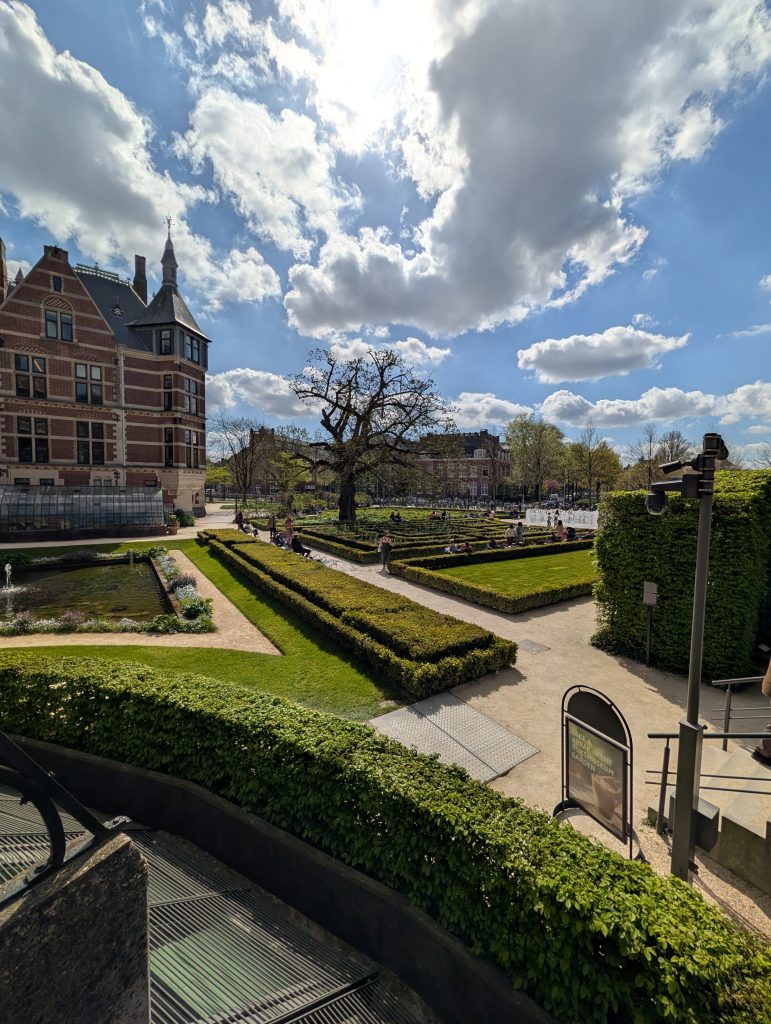
What distinguishes Amsterdam from comparable European capitals, however, is its disposition. The city is progressive, openly liberal, and genuinely at ease with itself. Over 400 kilometres of dedicated cycling paths make the bicycle the primary and most logical way to move through the city — sustainable, efficient, and entirely in keeping with an urban culture that has never felt the need to apologize for doing things differently. The streets are alive at all hours. The café terraces extend well into the evening, and the energy of the place rewards those who stay curious rather than those who follow a prescribed route.
BEYOND THE OBVIOUS
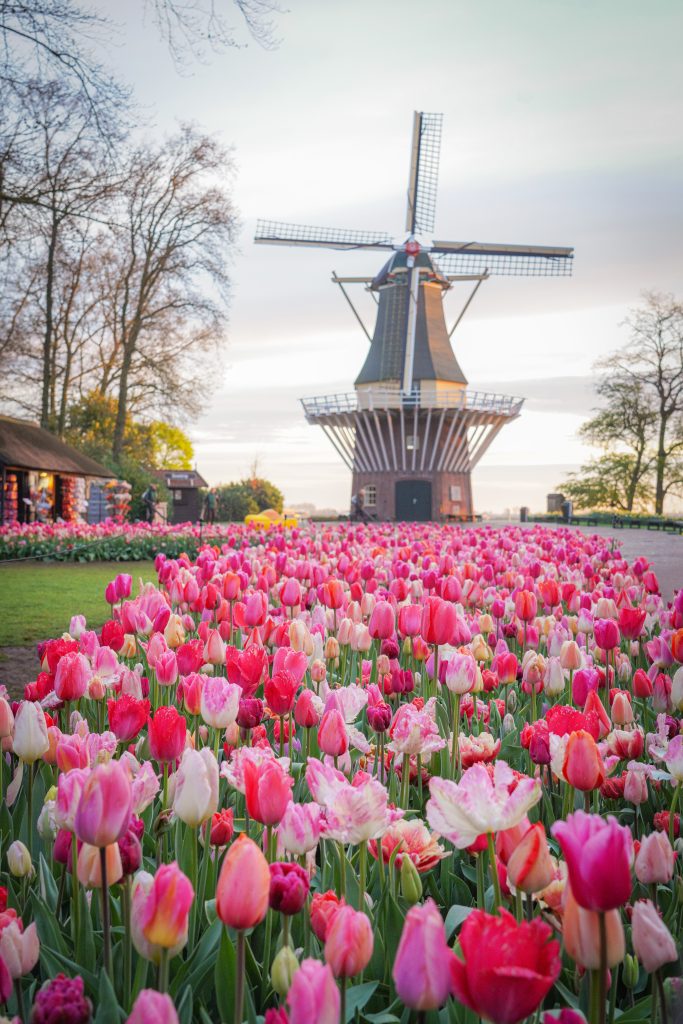
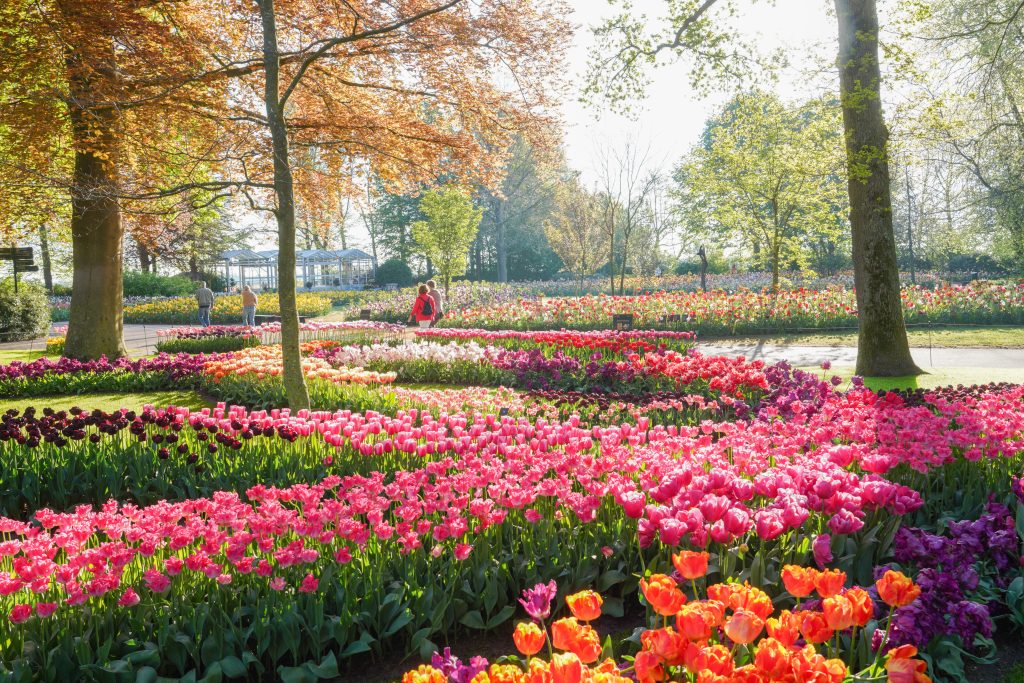
The Debussy’s excursion programme reflects an understanding of who is actually on board. A walking tour of Arnhem takes in the Eusebius Church, whose lower level opens into a catacombs section that adds unexpected historical depth to the visit. A full-day excursion from Arnhem combines a visit to Keukenhof Gardens with lunch and free time in the town of Lisse — 32 hectares of over seven million blooming bulbs, including more than 800 tulip varieties, that constitute the largest spring flower garden in the world.
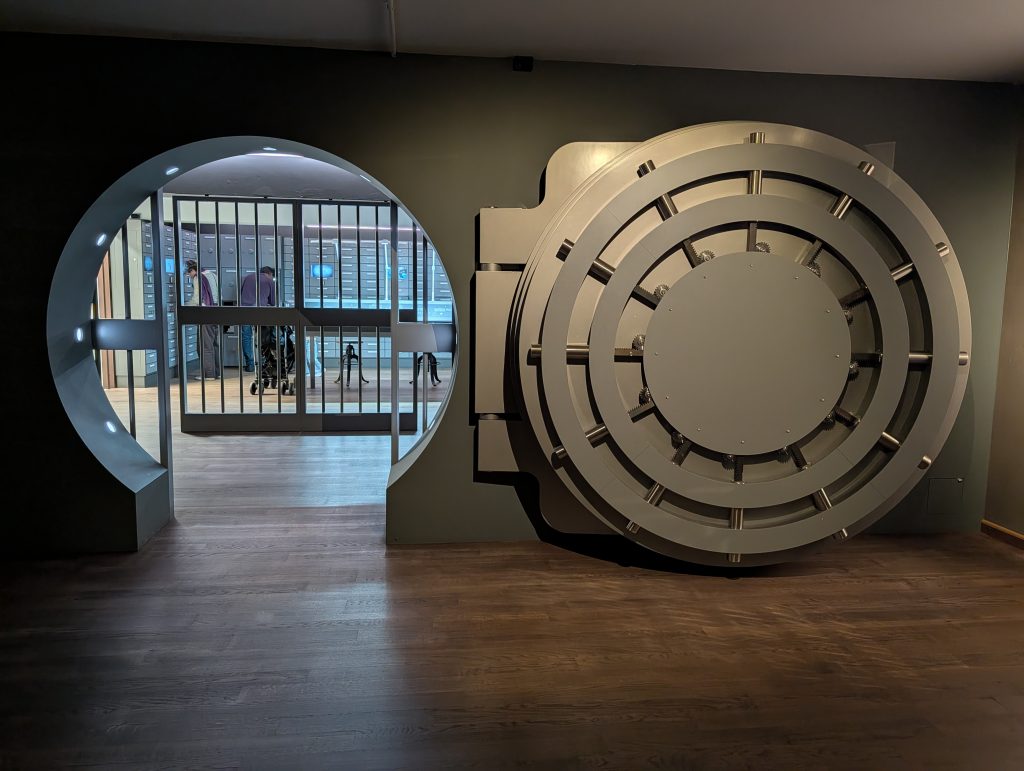
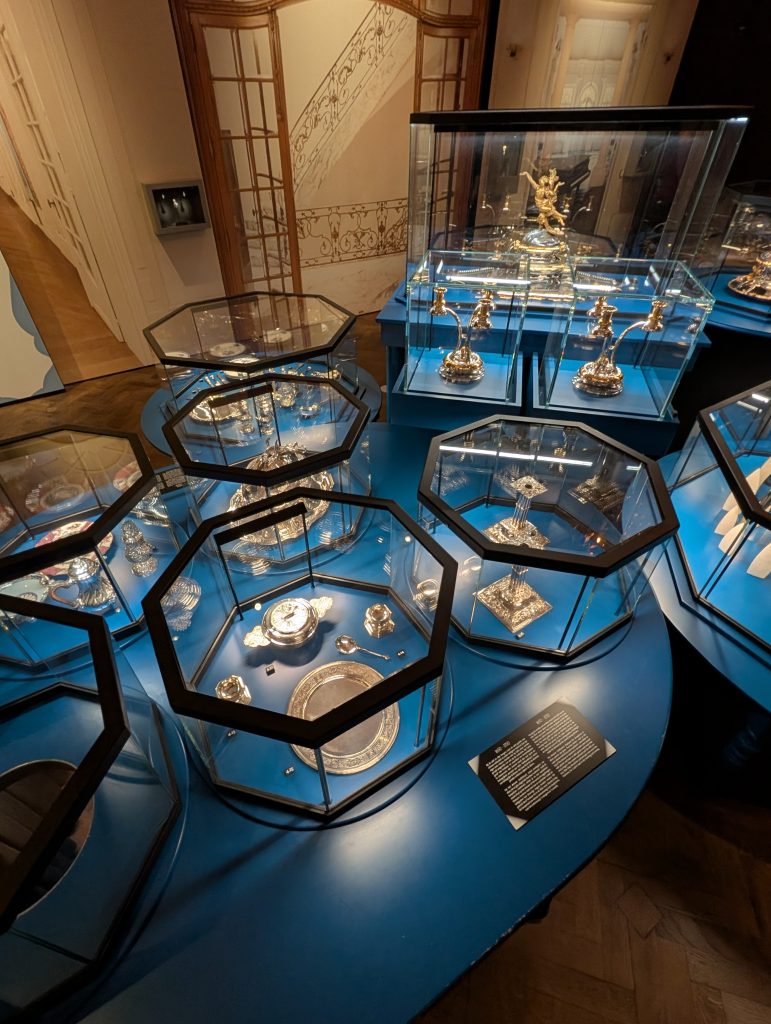
In Antwerp, the itinerary includes a visit to the DIVA Museum — Belgium’s museum of diamonds, jewellery, and silversmithing — currently presenting Rings that Rock, an exhibition tracing the cultural history of the ring from antiquity to contemporary design.
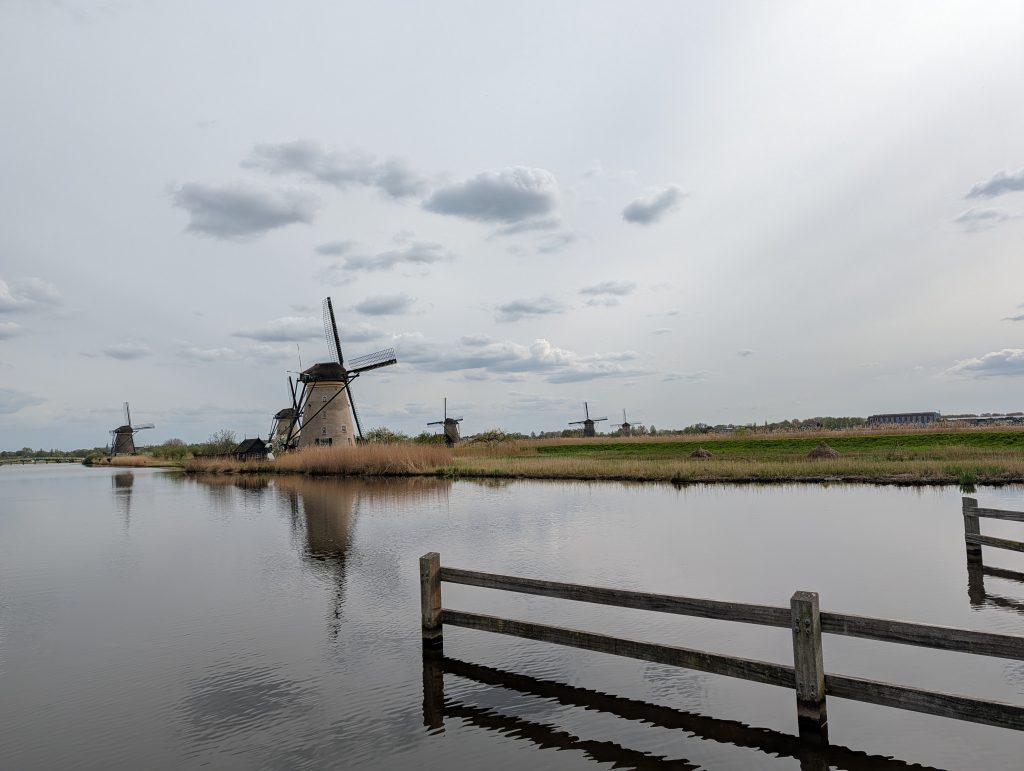
Rotterdam brings the Windmills of Kinderdijk — nineteen working eighteenth-century windmills built around 1740 to drain the surrounding polders, now a UNESCO World Heritage Site and one of the most photographed landscapes in the Netherlands.
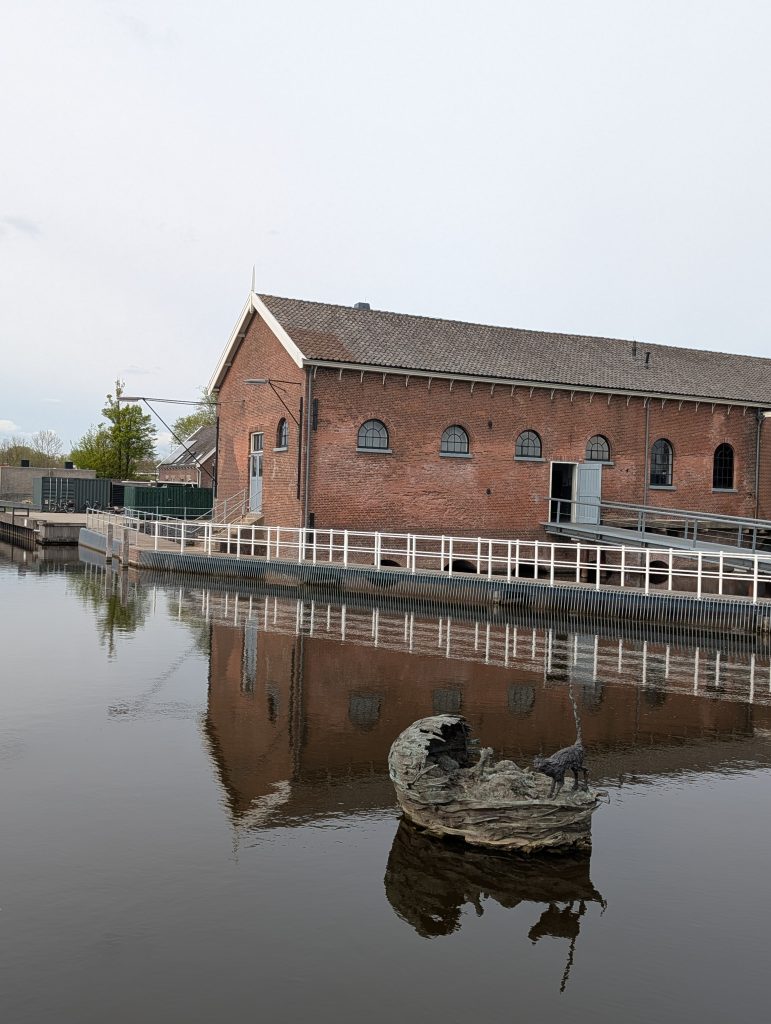
What distinguishes the programme is its range. The Amsterdam Street Art and Graffiti Museum sits within the same itinerary as the cathedral tours and canal cruises — a street-level, culturally engaged experience that signals Riverside’s understanding that its guests are not a monolithic audience. There is always time, between the scheduled and the spontaneous, for a well-pulled espresso or a cold local lager alongside a local in the afternoon.
THE HOURS BETWEEN
Between organized excursions, each port extends an open invitation. Maastricht rewards those who wander without agenda — the Stokstraat Quarter, widely regarded as the city’s most luxurious precinct, delivers an exceptional concentration of high-end fashion and jewellery, with Prada, Gucci, Louis Vuitton, Cartier, and OMEGA among those represented along its historic streets. Its café culture is equally serious, and its terraces are among the more civilized places in Europe to spend an unscheduled hour.
Nijmegen offers its own quiet rewards — cycling enthusiasts will find the Velorama National Bicycle Museum a compelling detour, a quirky and well-curated institution that traces the history of the bicycle through one of the world’s most cycling-devoted cultures.
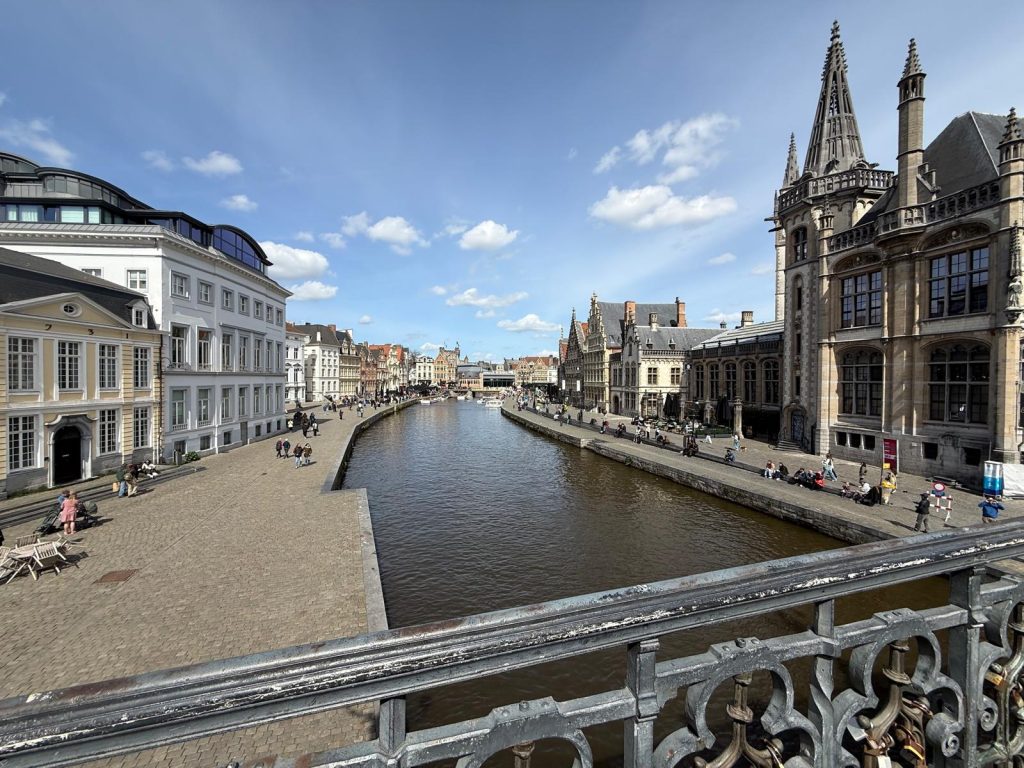
Ghent operates on its own terms entirely. One of Europe’s largest car-free city centres, it carries a sustainable, progressive energy that is amplified by a significant student population — the kind of city where the canals are lively, the cafés stay open late, and the nightlife has genuine character rather than a tourist veneer.
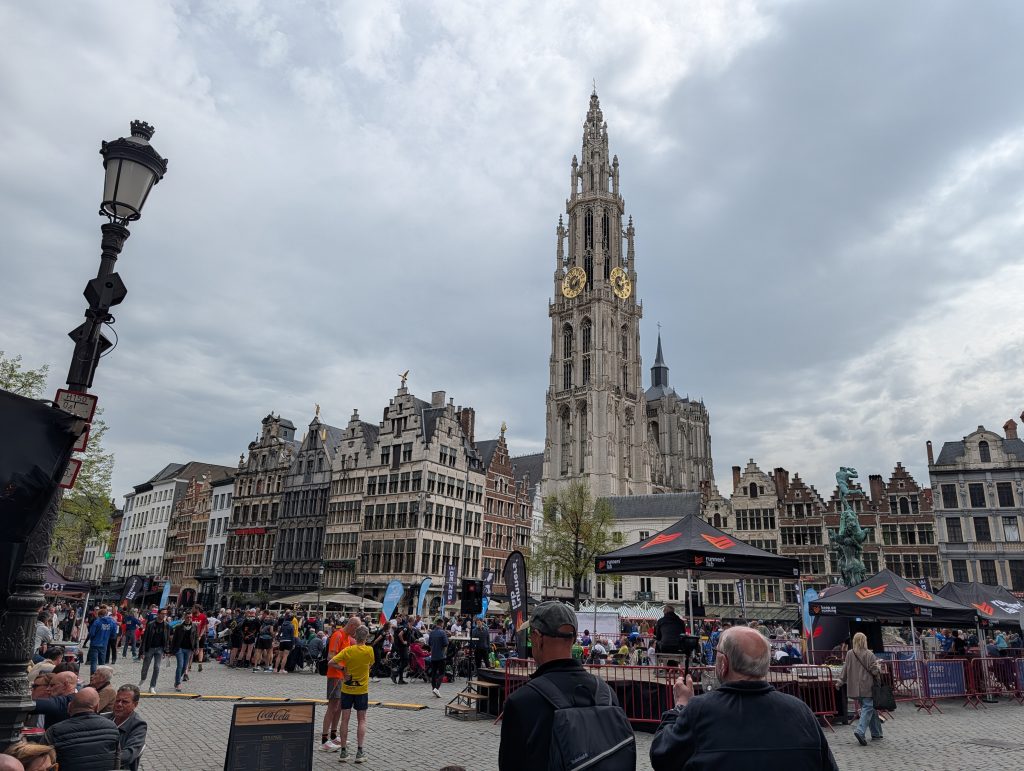
Antwerp is a different proposition — a city that takes fashion seriously at an institutional level. Home to the legendary Antwerp Six designers and supported by the Royal Academy of Fine Arts and the MoMu Fashion Museum, it stands as one of Europe’s leading centres of avant-garde fashion. For anyone with an eye for design, an afternoon here rarely goes to waste.
The Debussy provides the architecture of the journey. What fills the hours within it remains entirely the guest’s own.
THE CASE FOR SIMPLICITY
Luxury, at its most functional, is the elimination of everything that stands between a person and an exceptional experience. The Debussy practices this without announcement.
No transfers to coordinate across five cities. No hotel deposits or checkout times. No deliberation over the restaurant on the corner when the ship’s own table is already set to a standard that the corner restaurant would be hard-pressed to match. No tipping, no rejected credit cards, no currency management, no loading the car at dawn.
What the Debussy ultimately offers is the freedom that comes from having every logistical consideration resolved in advance — the liberty of moving through one of the world’s most rewarding travel corridors with complete composure, in a setting designed with genuine taste, among guests who arrived at the same decision for the same reasons. The ship is the constant. The cities are what change.
The Debussy is Riverside Luxury Cruises’ most eloquent expression of what river travel can be — officially christened in Amsterdam in 2024, and already setting a standard that the category will be measured against for years to come.
Riverside’s cruise season runs from early spring through late December, spanning Europe’s most celebrated river corridors — the Rhine, the Rhône, the Moselle, the Main, and the Danube. Nearly year-round, and never the same voyage twice.
The tulips have had their moment. The rivers, however, are still moving. There has never been a better time to book.
All photography provided by Riverside Luxury Cruises, Helen Siwak, and Jade Massie.
Author Profile

- Helen Siwak is the founder of EcoLuxLuv Communications & Marketing Inc and publisher of Folio.YVR Luxury Lifestyle Magazine and PORTFOLIOY.YVR Business & Entrepreneurs Magazine. She is a prolific content creator, consultant, and marketing and media strategist within the ecoluxury and luxury lifestyle niches. Helen is the west coast correspondent to Canada’s top-read business magazine Retail-Insider, holds a vast freelance portfolio, and is an EIC for Hire. Connect with her here: [email protected].
Latest entries
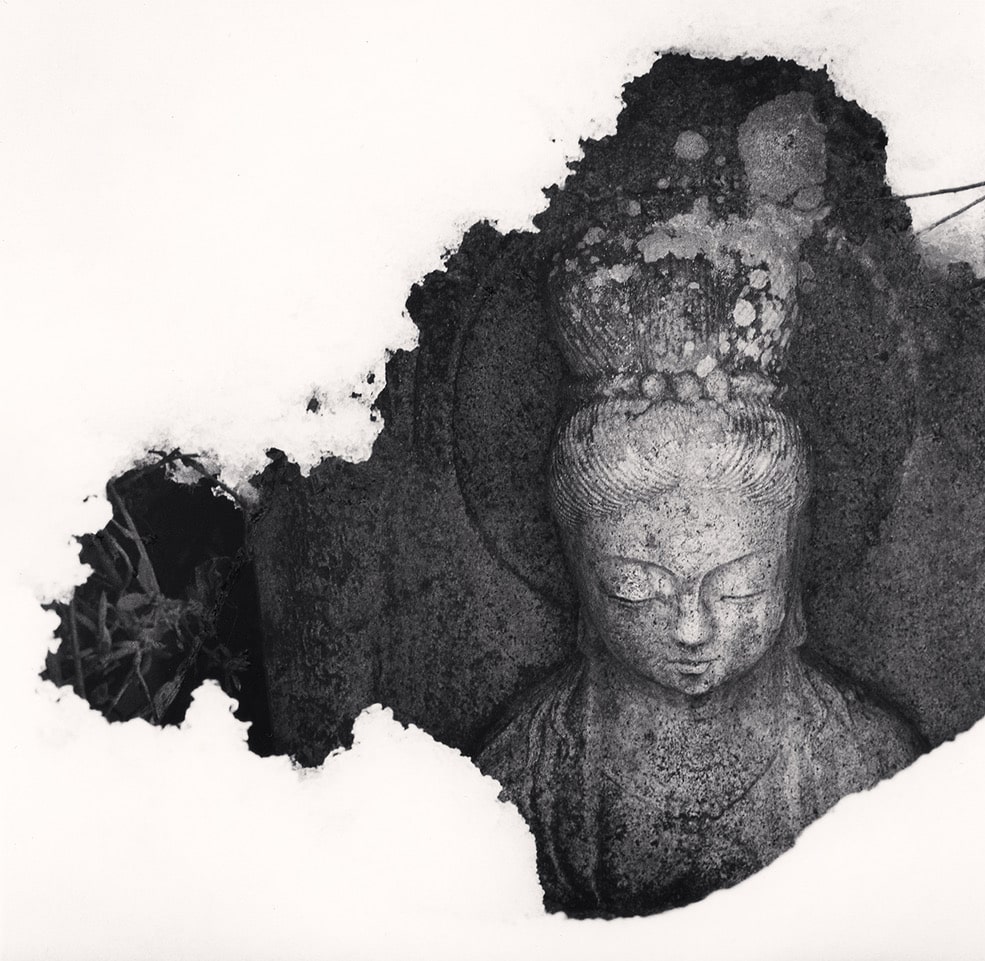 FoF ☆ Arts & CultureOctober 13, 2026From a Business Card to a Seven-Year Partnership: Michael Kenna and Kostuik Gallery
 FoF ☆ Culinary, Wine, SpiritsOctober 13, 2026Canada’s Great Kitchen Party Celebrates 20 Years With a Vancouver All-Star Invitational
 FoF ☆ Charity & PhilanthropyOctober 12, 2026Dinners Are Sold Out, But Vancouver Entertains Is Just Getting Started
 ☆ Issue #43 - September 2026October 10, 2026The Stylist Who Is Ready to Talk: Michelle Addison Goes Independent