The story of Sabyasachi Mukherjee is one of radical conviction. Born into a middle-class Bengali family in Kolkata, he initially set his sights on medicine — until the National Institute of Fashion Technology redirected the course of his life entirely. He graduated in 1999 with three major distinctions, rejected every job offer extended to him, borrowed 20,000 INR from his family, and set out to build something the world had not yet seen — India’s first global luxury house. He opened his workshop with a workforce of three. What followed was not a quiet ascent. It was a declaration.
His 2002 debut at India Fashion Week announced him immediately, earning a feature in Women’s Wear Daily and the distinction of being named the future of Indian fashion. Awards from Mercedes-Benz New Asia Fashion Week and Lakmé Fashion Week followed, along with time spent working alongside the studio of Jean Paul Gaultier in Paris. He became the first Indian designer to show at Milan Fashion Week, and secured a coveted place at Browns in London — two milestones that signalled, early on, the scale of his ambition.
He has long described himself as a global nomad — someone for whom travel is not simply movement but a sustained practice of immersion, gathering cultural nuance, craft memory, and emotional impression from every corner of the world. It is a sensibility that runs through everything the house produces.
THE BRIDAL TURNING POINT
By 2007, after years on the international stage — débuts at Milan and New York Fashion Weeks, a window at Browns in London, and a National Award for Best Costume Design for Sanjay Leela Bhansali’s celebrated film Black — Mukherjee made a deliberate pivot. His first bridal collection, “Chand Bibi,” launched at Lakmé Fashion Week and fundamentally reshaped the Indian bridal landscape. Rooted in heritage craft and suffused with his distinctive bohemian sensibility, the Sabya Bride became a cultural phenomenon, establishing him as the definitive choice for the country’s leading families and celebrities.
CRAFT AS COMMERCE
The years that followed were defined by an extraordinary commitment to Indian artisanal tradition. Mukherjee travelled across the country building economic partnerships with weavers, embroiderers, block printers, and goldsmiths — from Varanasi and Kashmir to Tamil Nadu and Gujarat. Today, the house employs 1,000 craftspeople directly and commissions over 3,000 more.
His position has always been that the future of Indian luxury lies not in any imitation of the West, but in the unmatched depth of India’s own craft legacy — a legacy he believes the country has never fully asserted on the global stage, and one he has made it his life’s work to champion.
HIGH-PROFILE COLLABORATIONS
From 2015 onward, Mukherjee’s global collaborations read as a masterclass in strategic positioning. His first international partnership with Christian Louboutin — merging the house’s hallmark embroidery with Louboutin’s iconic red sole — established the template for everything that followed. Commissions came from the Victoria and Albert Museum for their landmark “The Fabric of India” exhibition. Sell-out capsule collections have included Bergdorf Goodman, Starbucks, and Pottery Barn.
A collaboration with L’Oréal Paris made him the first Indian brand to partner with the global beauty giant on a limited edition collection. His debut at Bergdorf Goodman in New York with an exclusive High Jewellery offering confirmed his standing among the world’s most prestigious retail institutions.
The celebrity dressing that accompanied this period was equally significant. Mukherjee dressed Anushka Sharma and Virat Kohli for their Tuscany wedding, Deepika Padukone and Ranveer Singh at Lake Como, and Priyanka Chopra and Nick Jonas for their Indian wedding in Rajasthan. Each moment extended the house’s reach far beyond India’s borders — and cemented its authority as the premier name in luxury bridal design.
TWENTY-FIVE YEARS ON
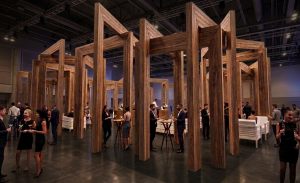
The silver jubilee of Sabyasachi was never going to pass quietly. Earlier this year, Mukherjee marked the milestone with an opulent cocktail reception in New York — an evening that drew a constellation of fashion’s most formidable names, including Anna Wintour, Georgina Chapman, Prabal Gurung, and Bibhu Mohapatra, among many others. His Highness Maharaja Sawai Padmanabh Singh of Jaipur travelled from India for the occasion, lending the evening the regal dimension it deserved. Guests were received personally by Mukherjee himself, and treated to a lavish banquet anchored by Dom Pérignon.
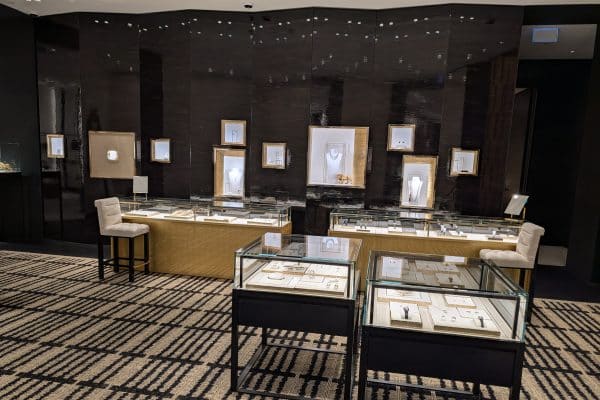
The New York boutique that hosted the celebration is itself a reflection of the world Mukherjee has spent twenty-five years constructing — intricate Indian art, cut glass, carved wood, and mother-of-pearl-inlaid furniture forming the backdrop for an edit of embroidered gowns, embellished outerwear, and fine jewellery. The latest collection, which had debuted earlier in the year on a Mumbai runway alongside Christy Turlington and Deepika Padukone, was presented in full.
The Vancouver appearance at Holt Renfrew was a different proposition — more intimate, more focused — but no less considered. Where New York celebrated the breadth of the house, Vancouver distilled it: a curated encounter with the accessories that perhaps best express Mukherjee’s belief that craft, at its finest, requires no grand stage to make itself felt.
THE VANCOUVER COLLECTION
Mukherjee’s design language has always operated in the space between opposing forces — maximalist exuberance held in check by minimalist restraint, ornamentation balanced against structural precision. It is a philosophy that found perhaps its most distilled expression in the accessory collection presented at Holt Renfrew Vancouver.
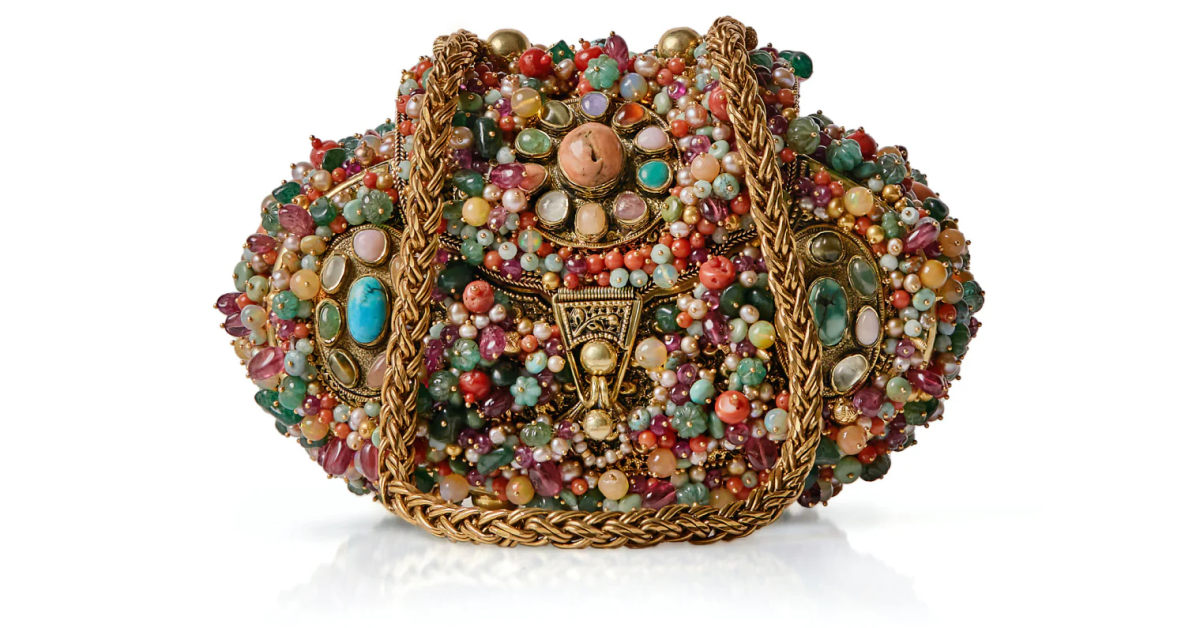
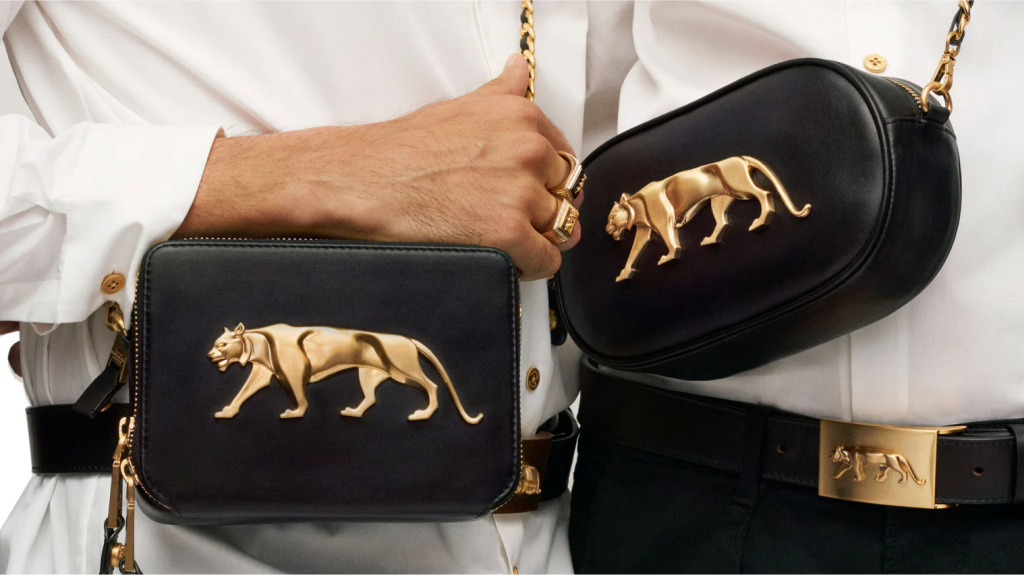
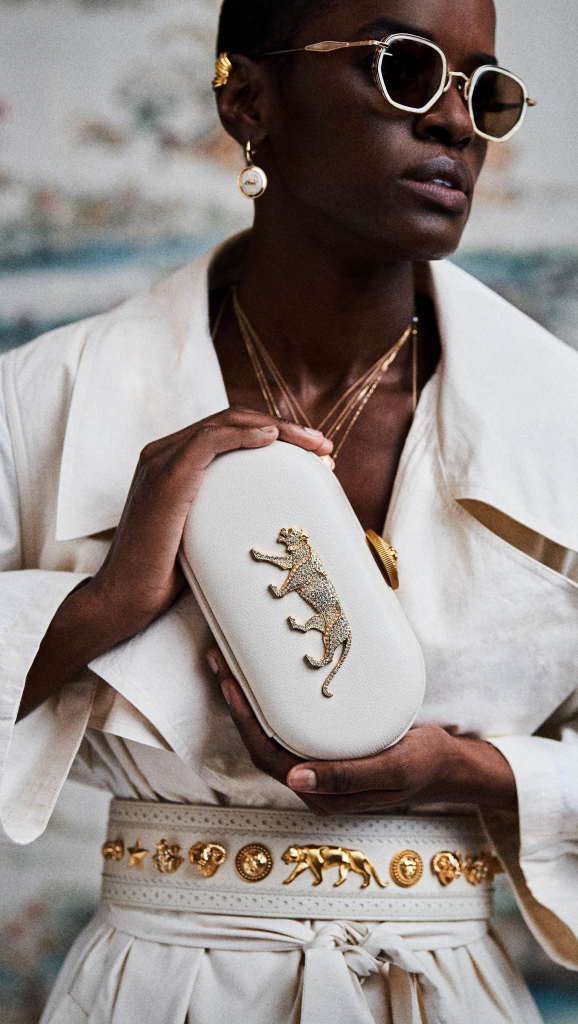
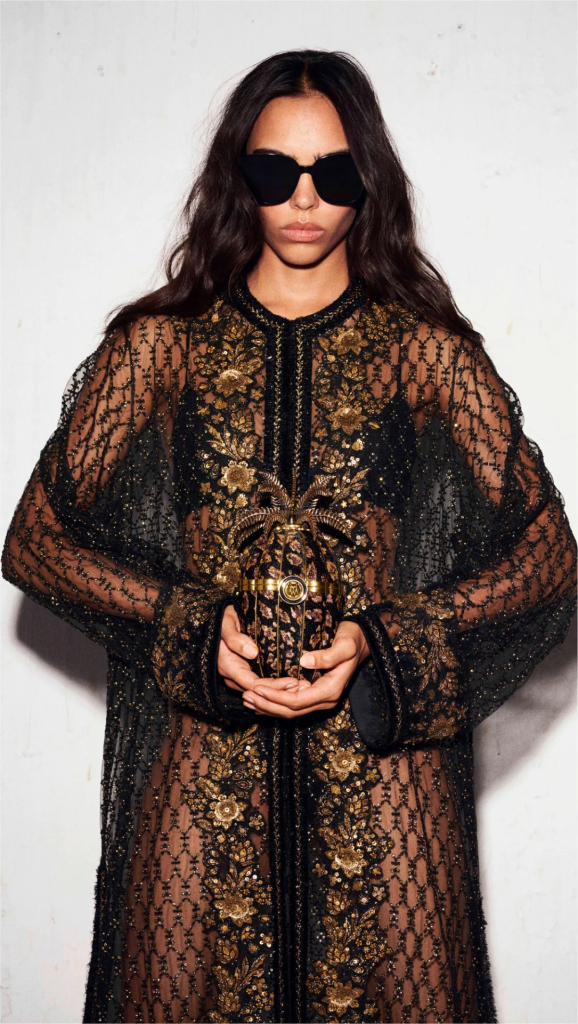
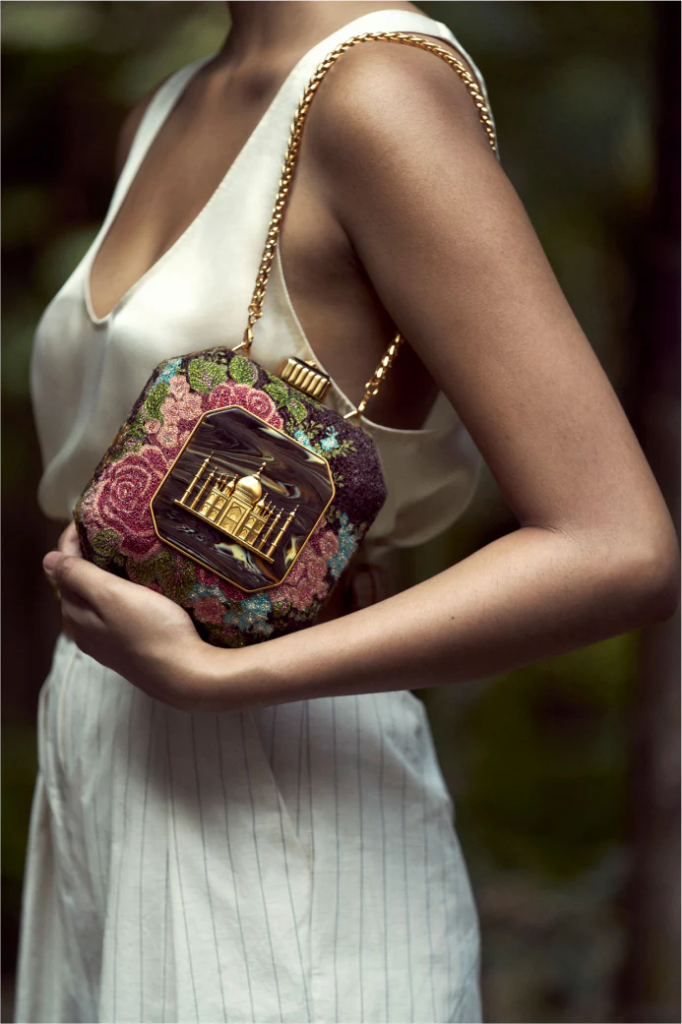
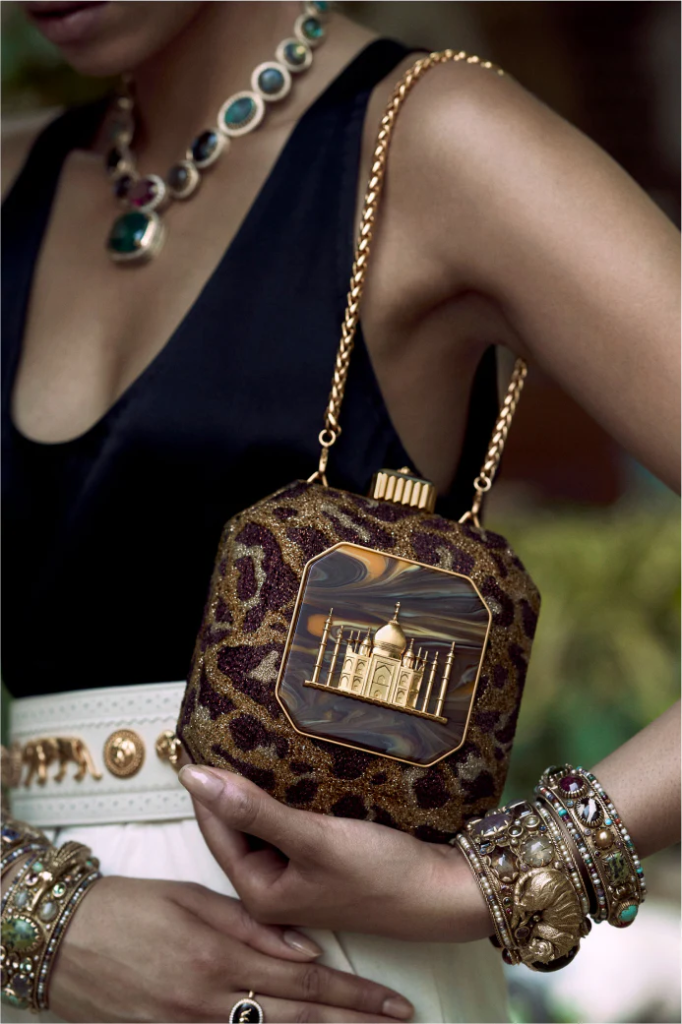
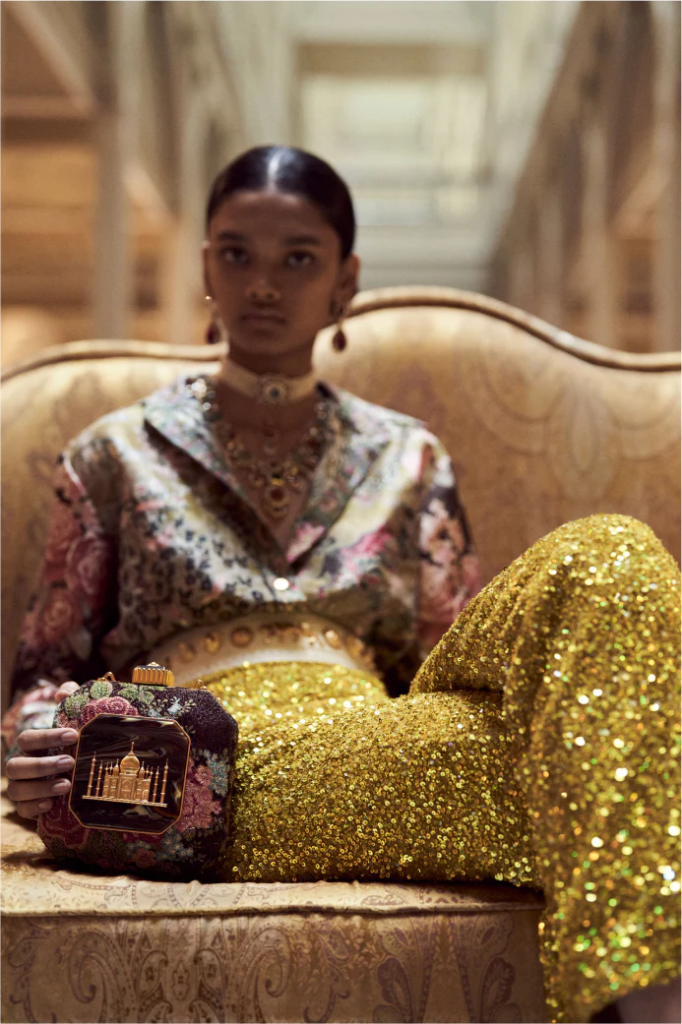
Conceived as a deliberate counterpoint to the softness and fluidity of Indian dress, the curated edit of handmade handbags brought together fine Italian textiles, intricate hand-executed embroidery, and gold-plated hardware. For an international audience accustomed to cleaner lines and quieter palettes, the collection introduced a sense of occasion through embellishment — without disrupting that restraint. It was not fusion. It was balance.
Two silhouettes anchored the edit. The embroidered bags placed surface and structure in deliberate harmony, the richness of Indian craft working in concert with the precision of fine Italian textiles. The Calcutta Sling offered the counterpoint — refined, minimal, and rooted entirely in the quality of its construction. Together, they articulated the full range of the house’s sensibility.
Mukherjee’s personal appearance at Granville Centre Court drew guests who came not merely to acquire but to connect — with the designer, with the collection, and with the cultural world the house represents. It was the kind of encounter that retail rarely offers: unhurried, considered, and anchored in the belief that the objects we choose to carry say something meaningful about who we are.
The showcase carried particular resonance for Vancouver’s South Asian diaspora — a community for whom the house’s commitment to artisanal craftsmanship and narrative-driven design runs deep. For many, it marked the first opportunity to encounter Sabyasachi’s distinctive language of romantic maximalism and old-world elegance in person, each piece arriving as an expression of heritage, identity, and artistry.
Vancouver-based stylist Aradhna Singh of The Creative A, who had previously encountered Mukherjee in India, attended to experience the collection firsthand.
“Witnessing Sabyasachi’s collection in Vancouver was pure sartorial magic. This was not just a showcase, but a tribute to the exquisite craftsmanship and opulent heritage that define true luxury. The seamless blend of traditional Indian artistry with modern elegance was a powerful testament to the transformative power of authentic design. As I navigate my creative journey here in Vancouver, moments like these are invaluable, reminding me why designers like Sabyasachi Mukherjee sit at the heart of fashion’s evolution, elevating cultural narrative into the realm of global luxury.”
A MEETING OF LEGACIES
The collaboration between Holt Renfrew and Sabyasachi represented far more than a retail event. As one of Canada’s most storied luxury retailers, Holt Renfrew provided a fitting stage for a house whose entire existence is built on the primacy of craft — bridging global fashion with a local audience ready to receive it. Together, they offered Vancouver something genuinely rare: a cultural and fashion experience that honoured heritage, celebrated artisanship, and spoke to the evolving definition of modern luxury.
Twenty-five years into a career built on defiance, craft, and an unwavering belief in the global authority of Indian luxury, Sabyasachi Mukherjee shows no signs of having reached a ceiling. If anything, the opposite appears true. With each new city, each new collaboration, and each room full of people encountering the house for the first time, the sense is less of an anniversary and more of an arrival. The journey from a three-person workshop in Calcutta to the floors of Holt Renfrew Vancouver is, it turns out, only the beginning.
All photography courtesy of Sabyasachi.
Author Profile

- Helen Siwak is the founder of EcoLuxLuv Communications & Marketing Inc and publisher of Folio.YVR Luxury Lifestyle Magazine and PORTFOLIOY.YVR Business & Entrepreneurs Magazine. She is a prolific content creator, consultant, and marketing and media strategist within the ecoluxury and luxury lifestyle niches. Helen is the west coast correspondent to Canada’s top-read business magazine Retail-Insider, holds a vast freelance portfolio, and is an EIC for Hire. Connect with her here: [email protected].
Latest entries
 FoF ☆ Arts & CultureOctober 7, 2026From Seminary to Silver Gelatin: The Fifty-Year Career of Michael Kenna
 ☆ Issue #43 - September 2026October 6, 2026Peter Marino Continues to Guide Chanel Forward with Design
 ☆ Issue #43 - September 2026October 6, 2026Joséphine’s Enduring Reign: Chaumet Arrives at Oakridge
 Press ReleasesOctober 5, 2026PRESS RELEASE: Michael Kenna’s “Beautiful Fukushima” Opens at Kostuik Gallery October 15